
LEFT TO HER OWN DEVICES - 20 Years of Sculpture in Motion (2018)
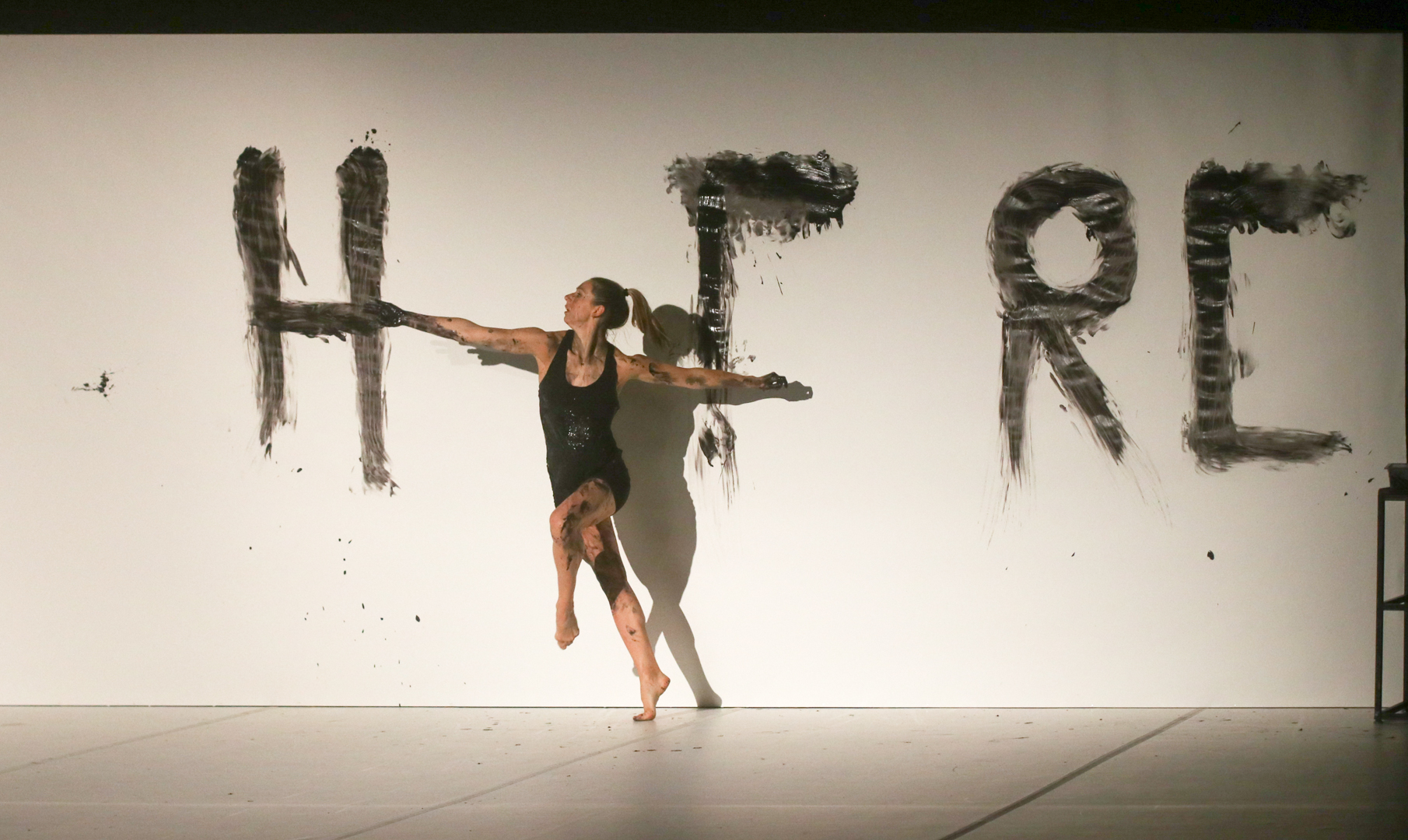
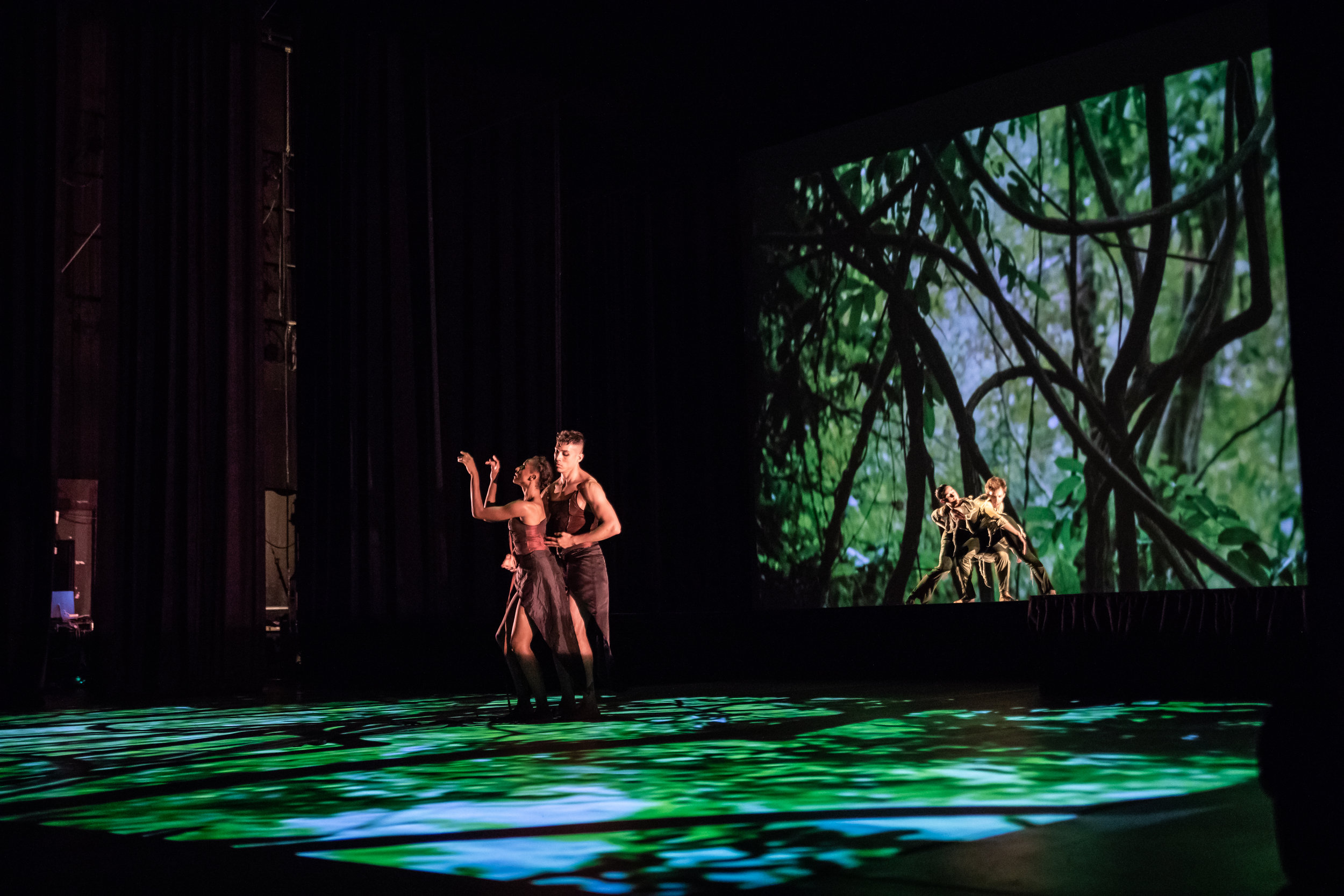
Celebrating the company’s twenty-year anniversary, Left to Her Own Devices: 20 years of Sculpture in Motion is a distillation of all of Capacitor’s work to date, focusing on physical structures—which have essentially been oppressive problems for the performers to overcome—to explore the theme of liberation.
Artistic Director / Choreographer / Designer: Jodi Lomask
Assistant Director: Cari Delaplane
Performers:
Cari Delaplane
Carolina Czechowska
Coral Martin
Dacia Biletnikoff
Elliott Gittelsohn
Erina Sumiyoshi
Inka Siefker
Ismael Alvarez Acosta
Linda Steele II
Lydia Clinton
Maggie Powers
Micah Walters
Miche Wong
Mila Toy Sparenberg
Oscar Trujillo
Ross Hollenkamp
Sadie Orozco
Yuko Hata
Musicians:
Anka Draugelates
Julia Ogrydziak
Composers: Toni Martin Dobrzanski, Noah Thorp & Kristina Forester, Jeremy Tressler, DJ Kraddy, EO, Anka Draugelates, Alex Kort, Michael Zbyszynski, Mouse on Mars, Beats Antique, Nina Simone,
Visual Designers: Can Büyükberber, Terry Estioko, and John Fesenko.
Media Contributors: Moving Arts, RJ Muna, David Hannan, Nate Pagel, Mary Franck, Amy Harrison, Dan Zox.
Teaser Videos: Shane Goodrich
Lighting Design: Linda Baumgardner
Stage Manager: Aurelia Moulin
Stage Design: Erik Walker
Structures: Jodi Lomask with Mark Nichols, Erich Chase, Vytas Sunspiral, Richard Kittle, Phil Halbert, Mark Metz, Johanna Neaderhouser, Zach Howard, and Zack Bernstein.
Costume Designers: Jodi Lomask with Kimie Sako, Kittle Munztel, Monique Kapp.
Lead Scientists: Dr Adam Gazzaley, Dr Tierney Thys, Dr Nalini Nadkarni, Dr Jesse Lomask,
Capacitor Board of Directors: Steve Scher, Thomas Parenty, Anthony Kweicen, Shirley Eng, Julia Ogrydziak, Jefferey Krause, Anya Kandel, and William Jon Shipley.
This show was made possible by Yerba Buena Center for the Arts, San Francisco Grants for the Arts / Hotel Tax Fund, The Kenneth Rainin Foundation, The Zellerbach Family Foundation, the Capacitor Creator Circle, and Anonymous donors.
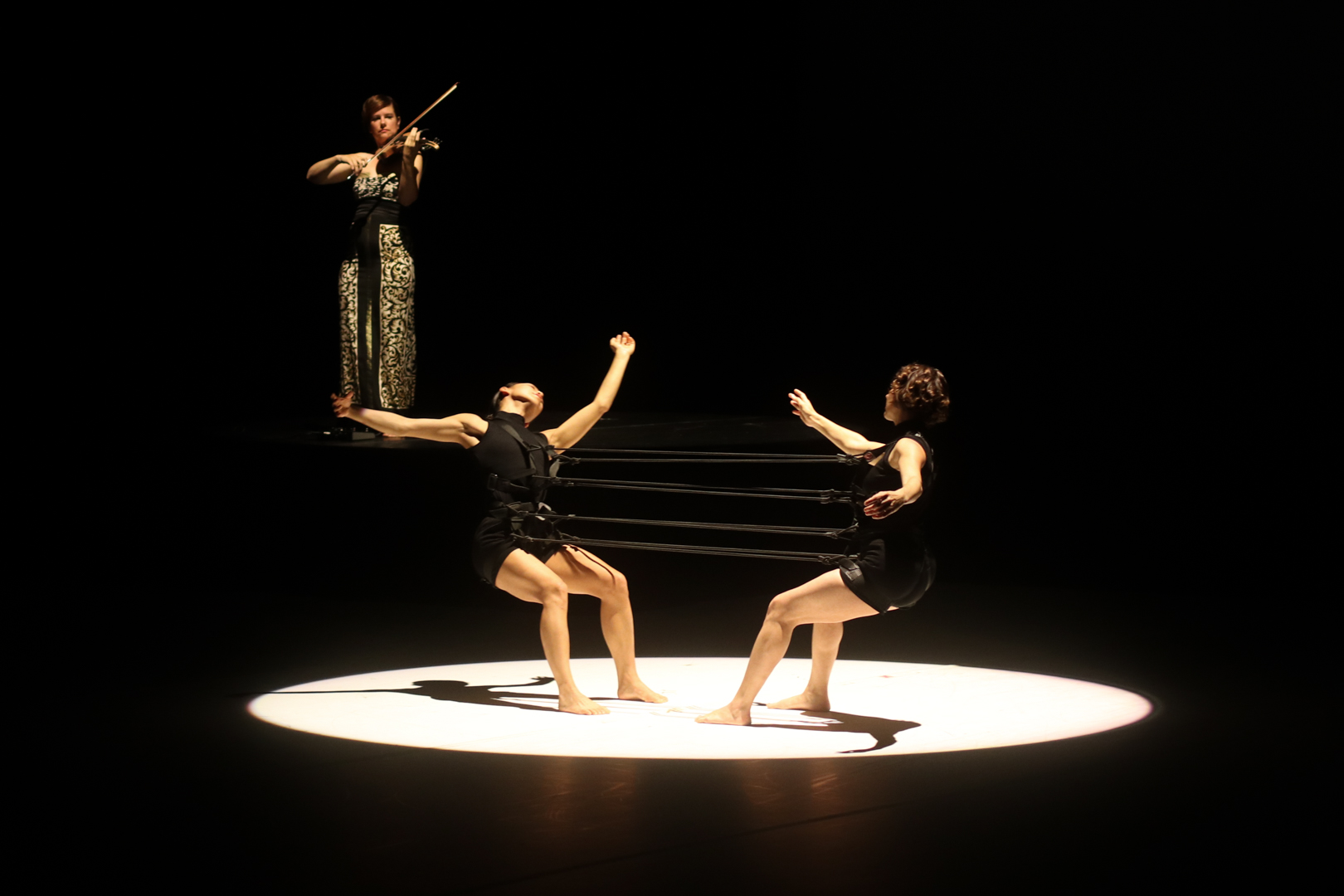
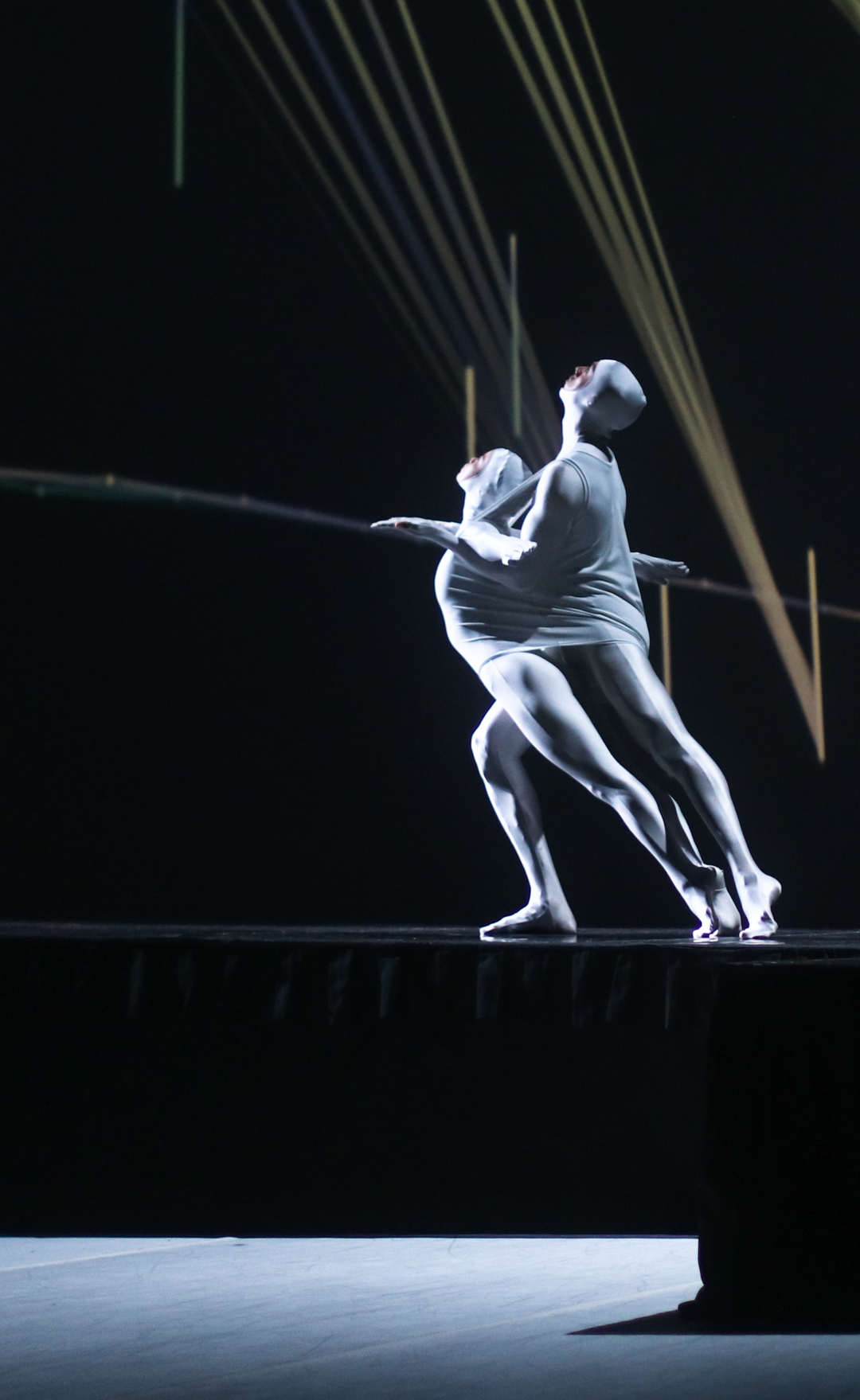
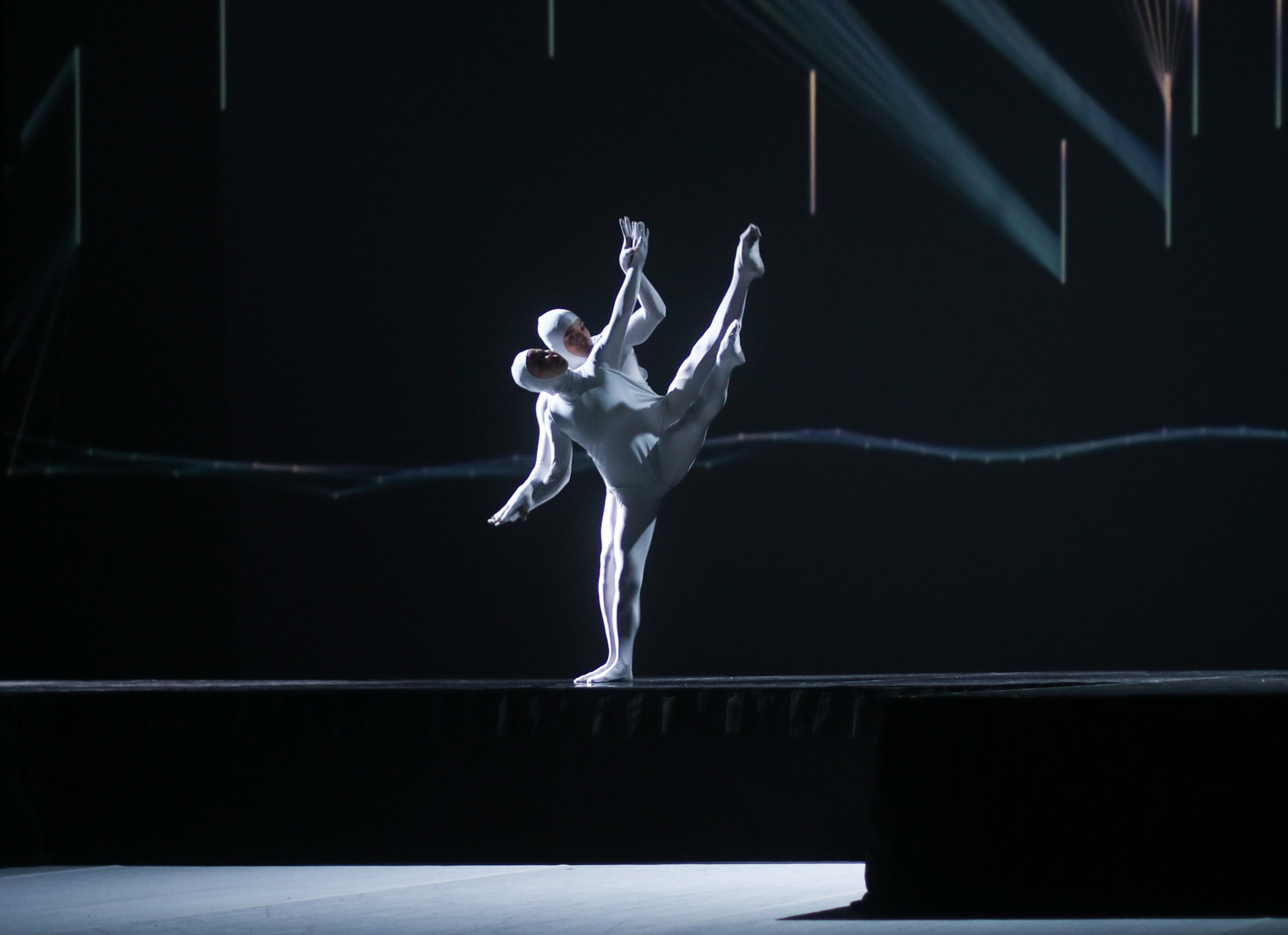
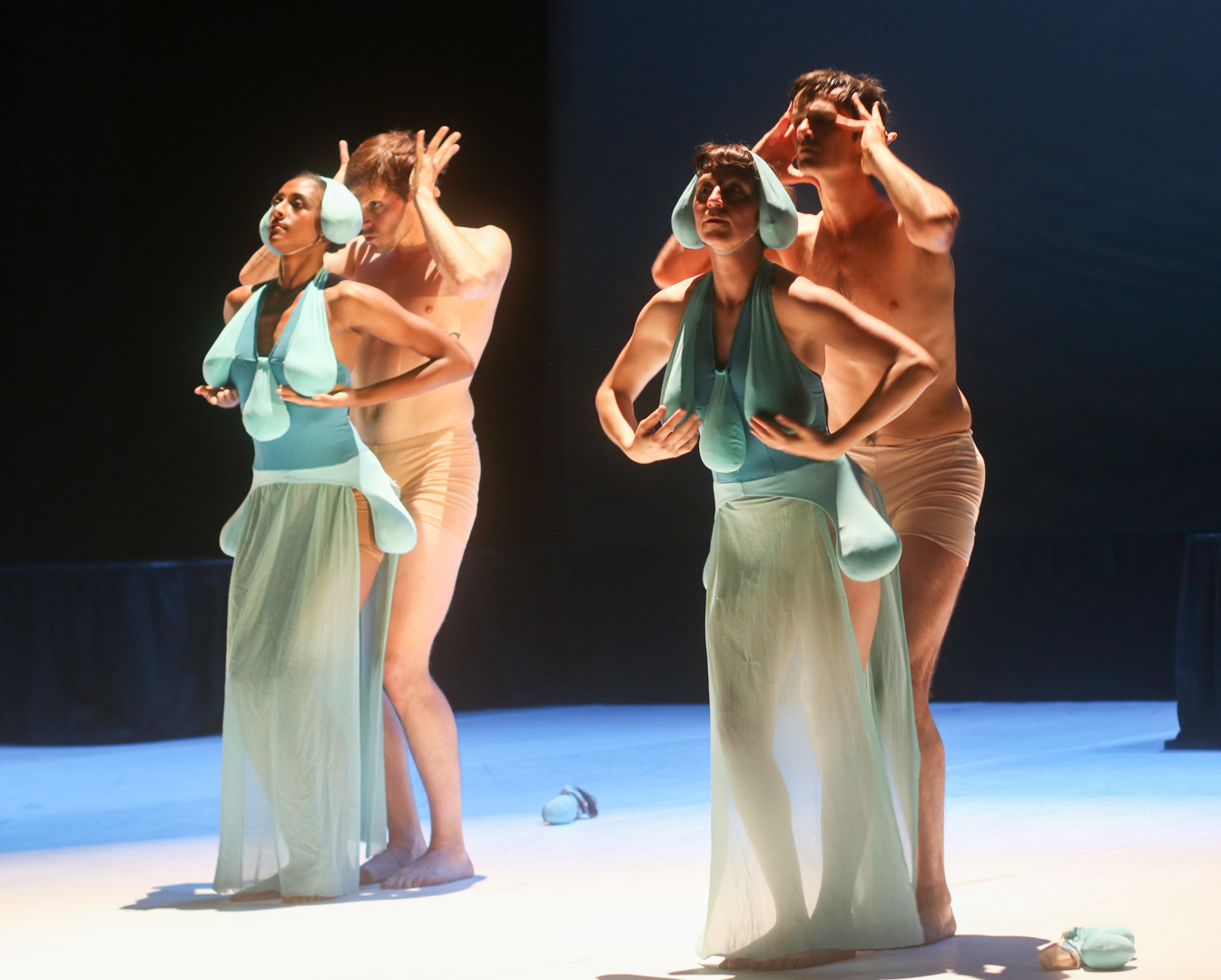
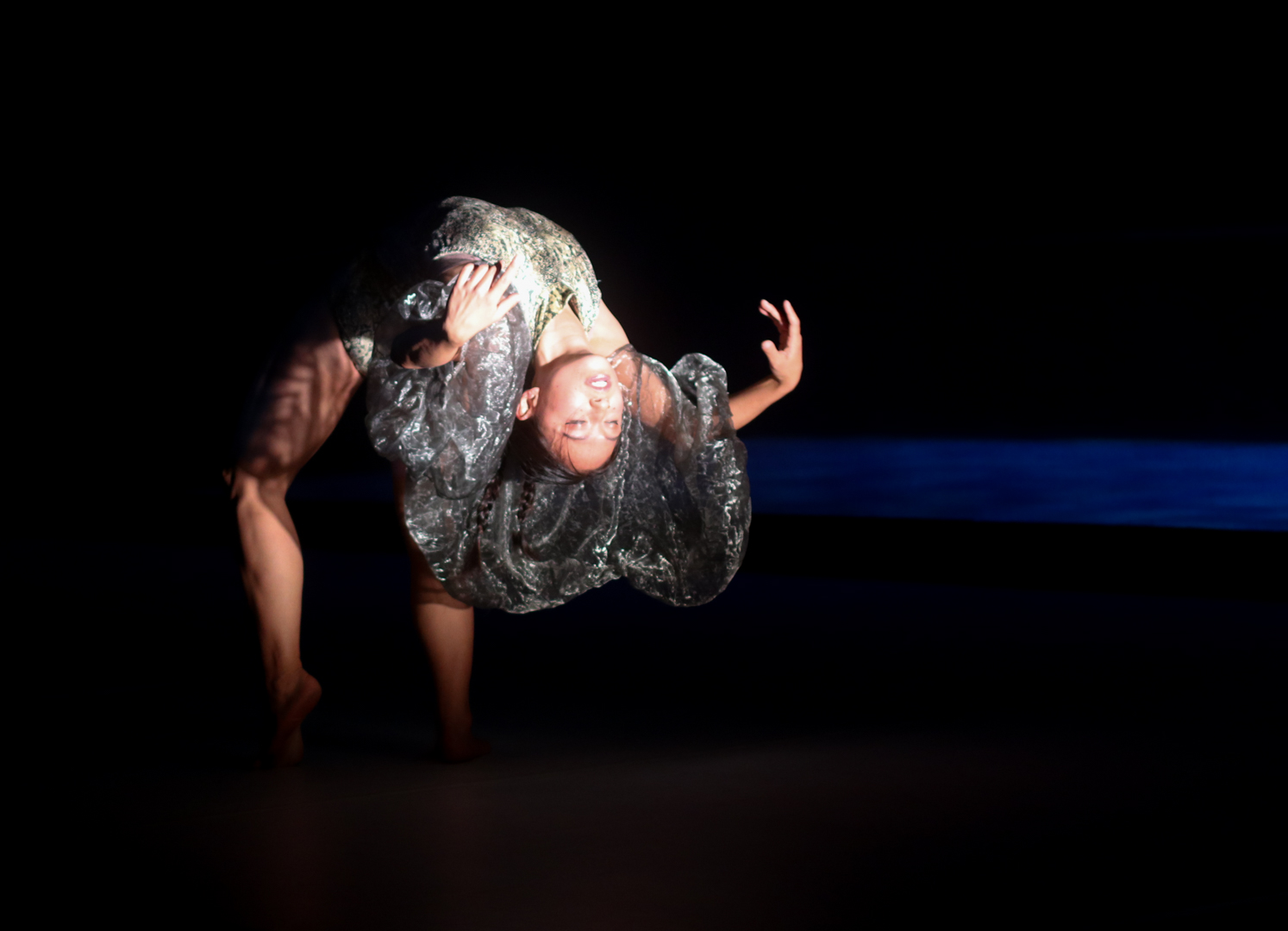
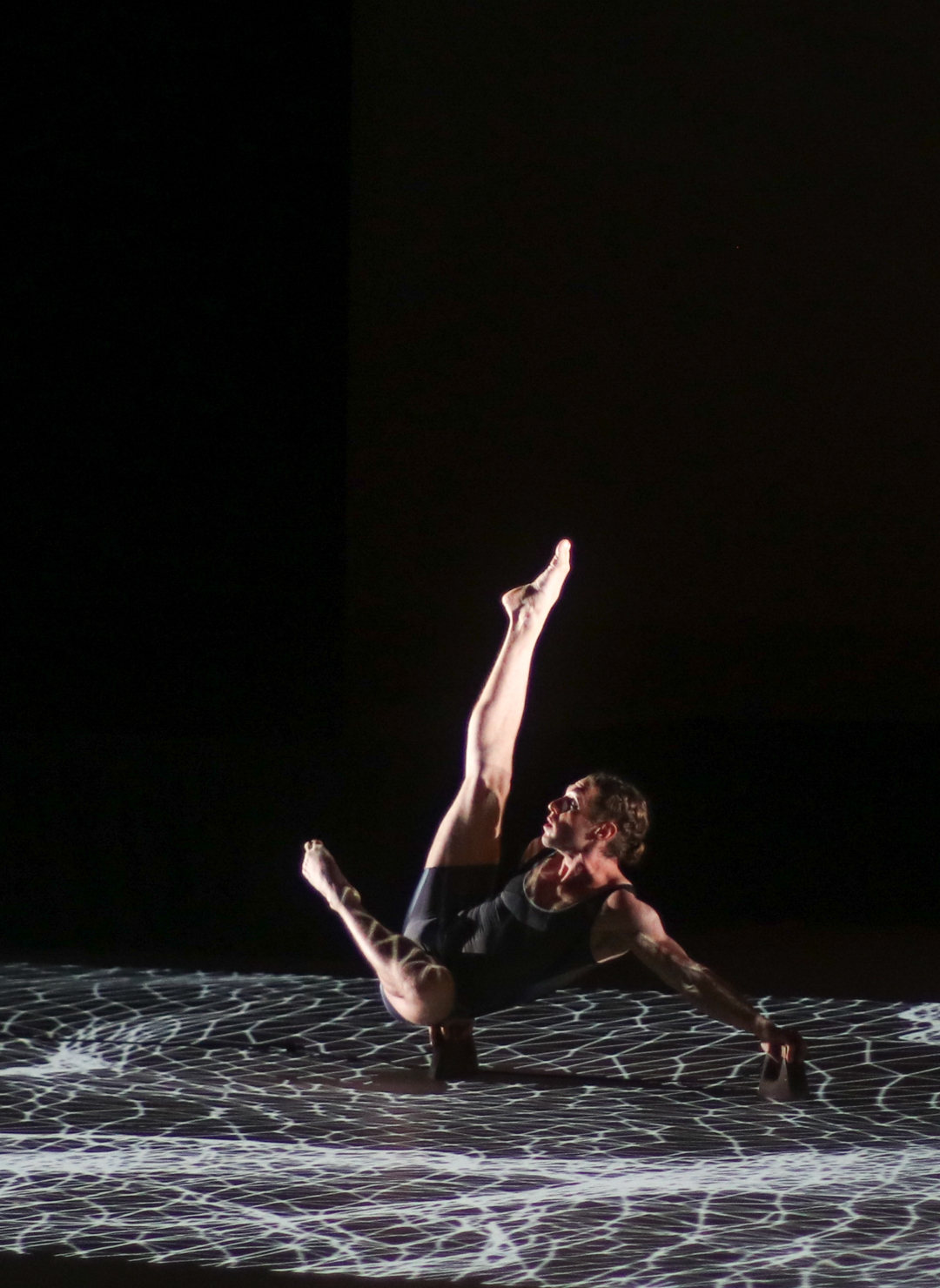
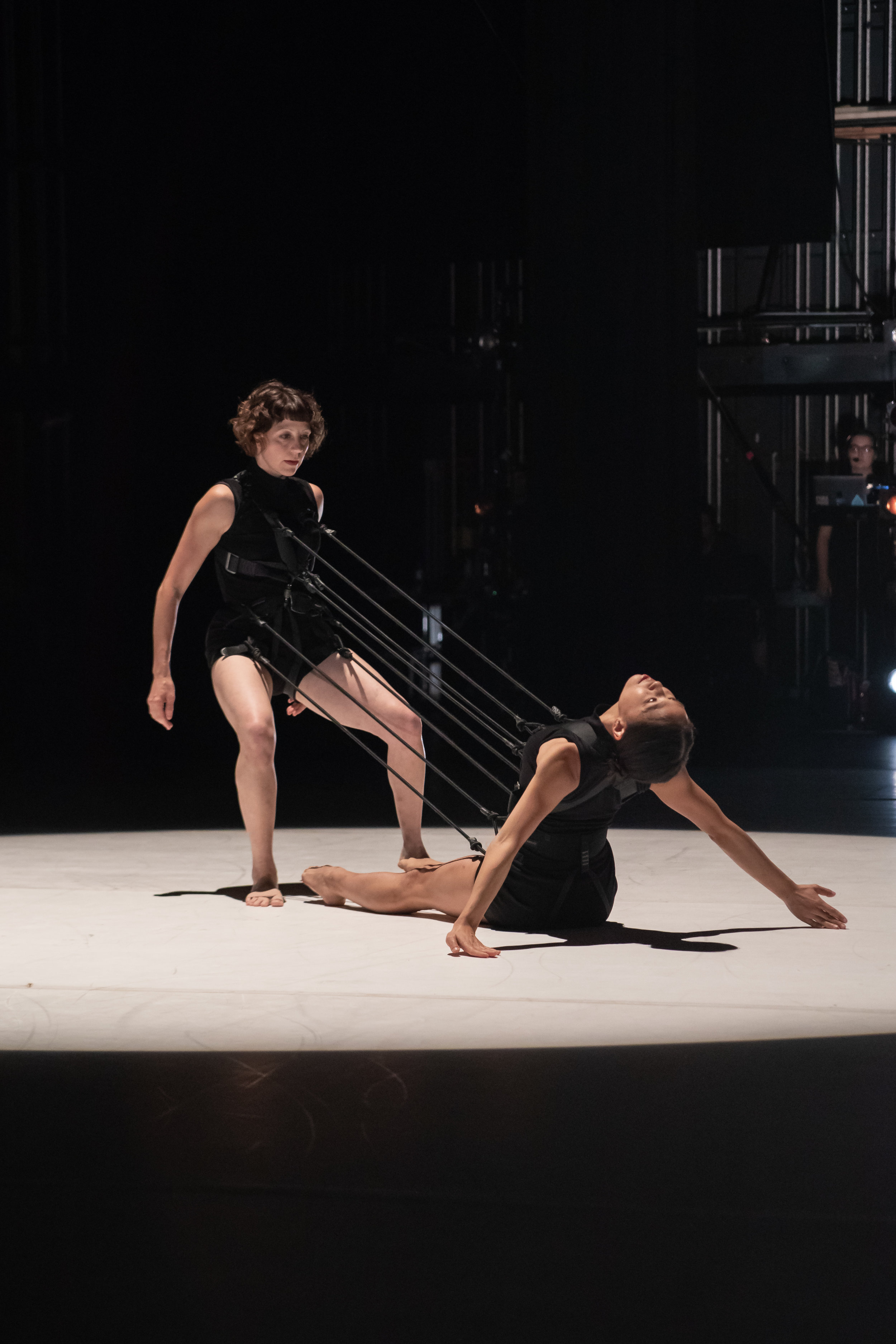
“The first excerpt (from 2000’s Within Outer Spaces) was all about connection. Two dancers entered the space, wearing a rigging apparatus of bungee cords over their costumes. These flexible fibers joined their cores and torsos, like the bungee cords were an extension of the rib cage or the vertebrae. At first, they gently explored tension and suspension, slowly pulling away from each other, the cords stretching. As the duet continued, the intensity of movement and dynamics increased, but the connection remained steadfast and solid. A number of choreographic scenarios felt in play: the give and take of partnering, the importance of counterbalance, and the notion of distance. How far away can a dancer be from his/her partner while still maintaining connection? The connection continued in a subsequent scene, though now, two dancers were almost fused together. The pair navigated a Cunningham-inspired movement phrase in close quarters, their costume having a shared top. What happens to partnering and movement when there are imposed restrictions and spatial constraints?”
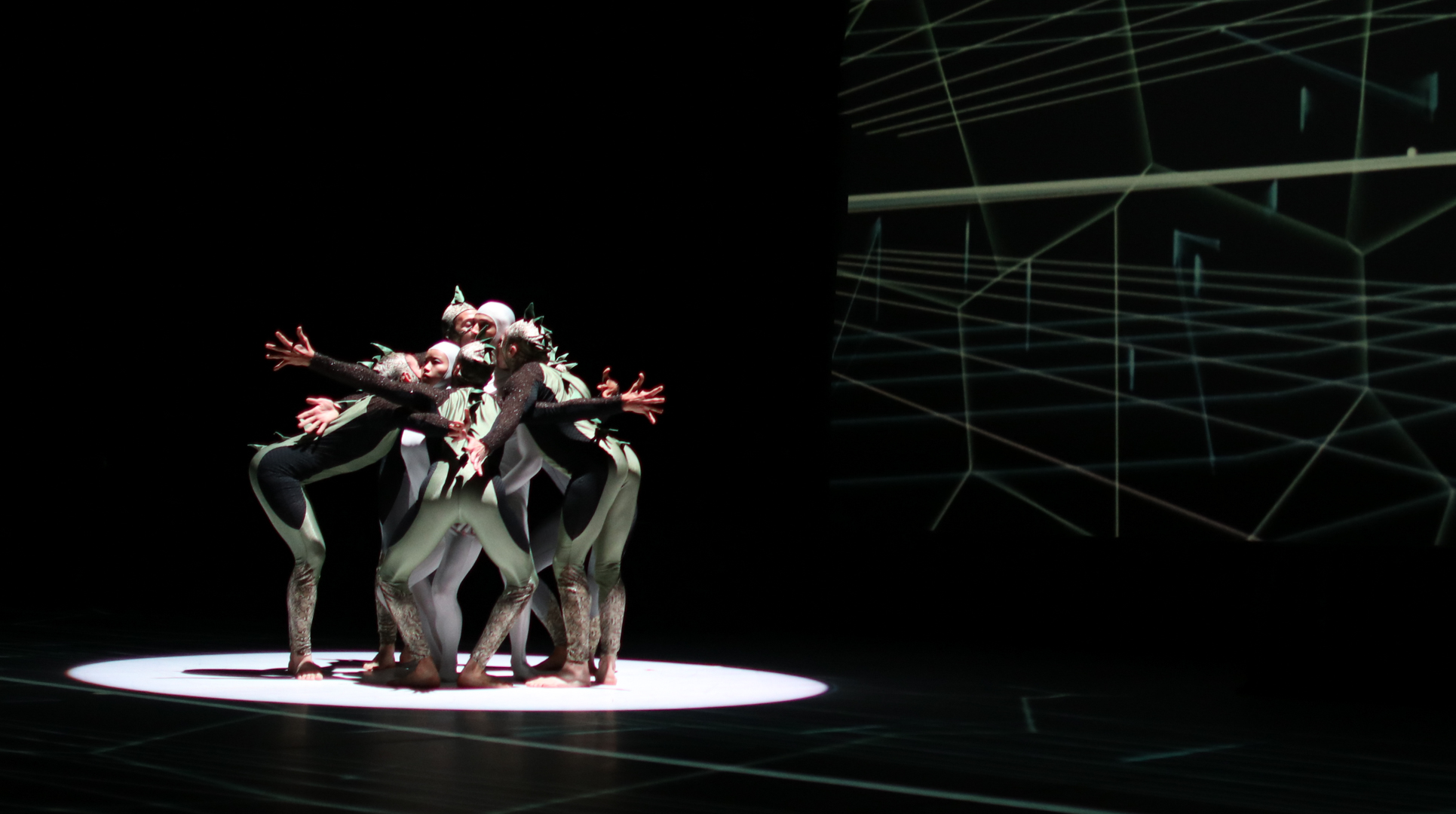
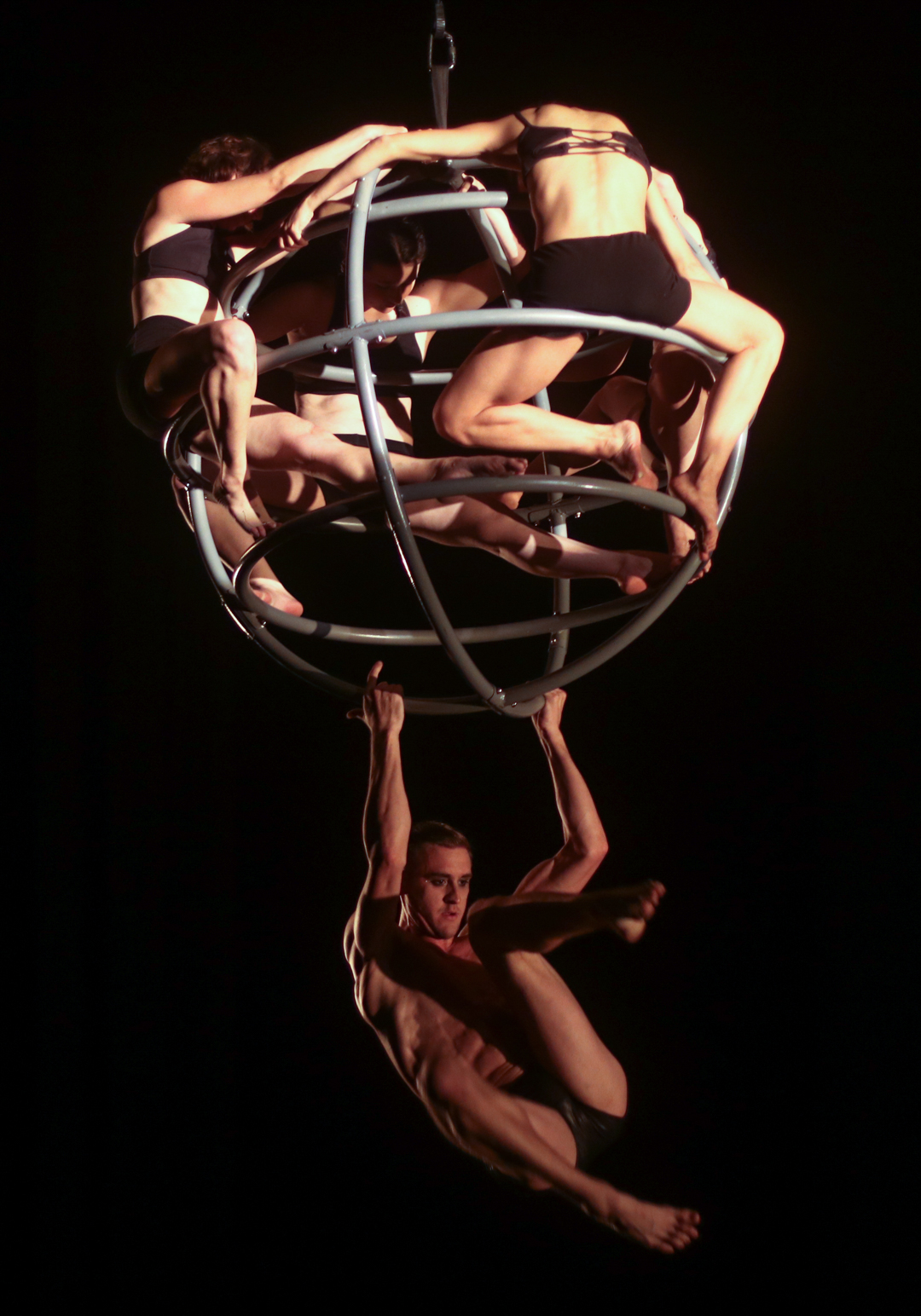
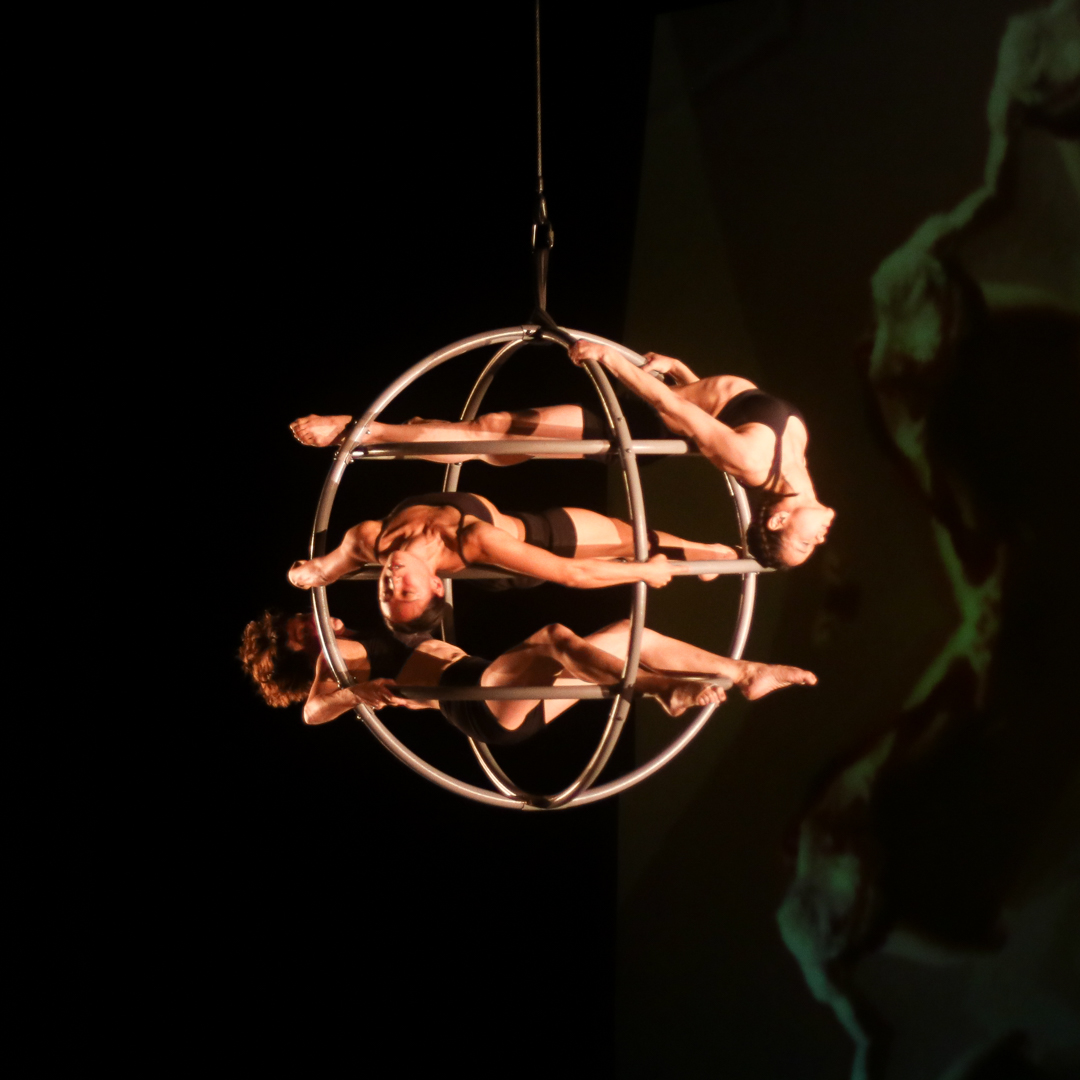
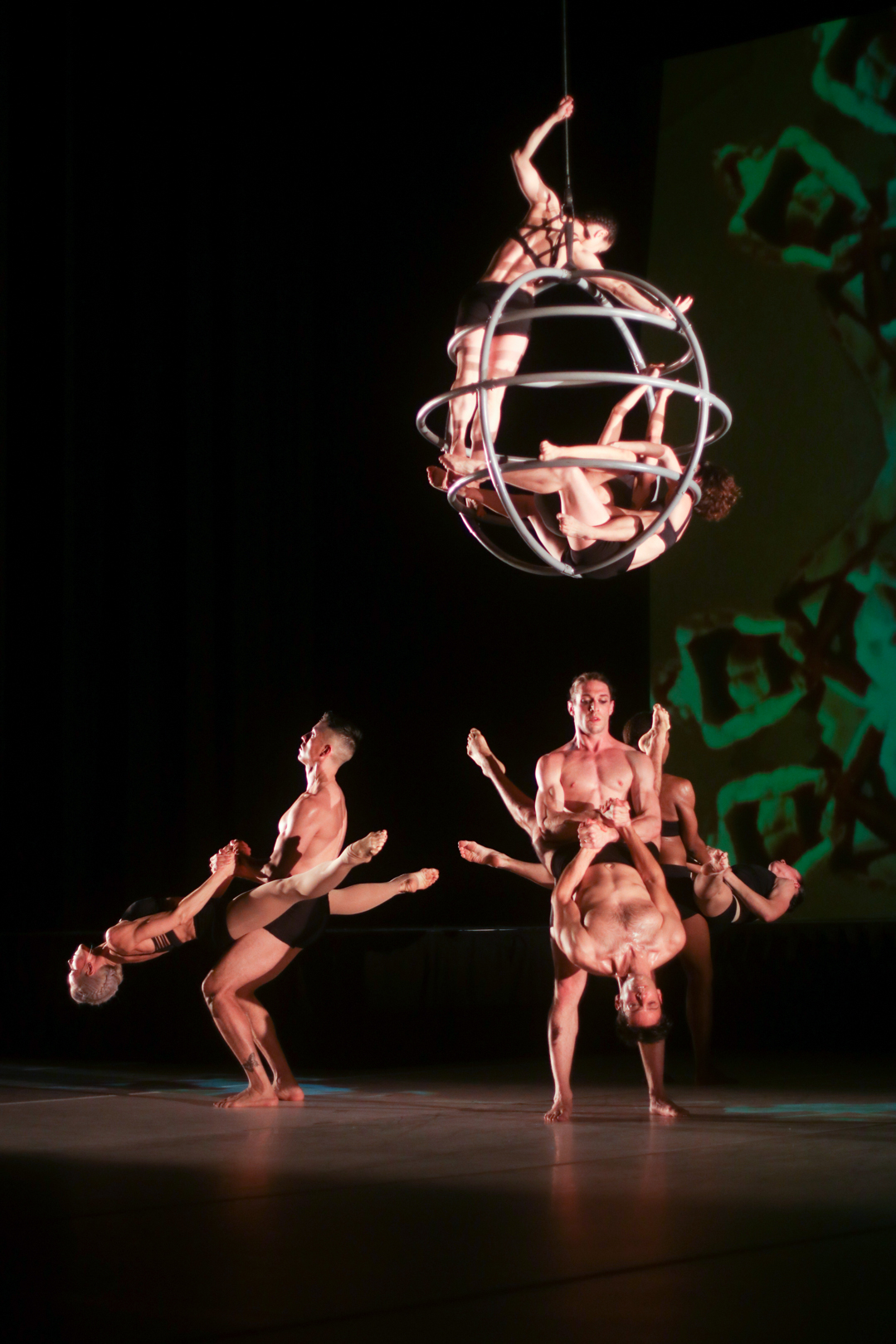
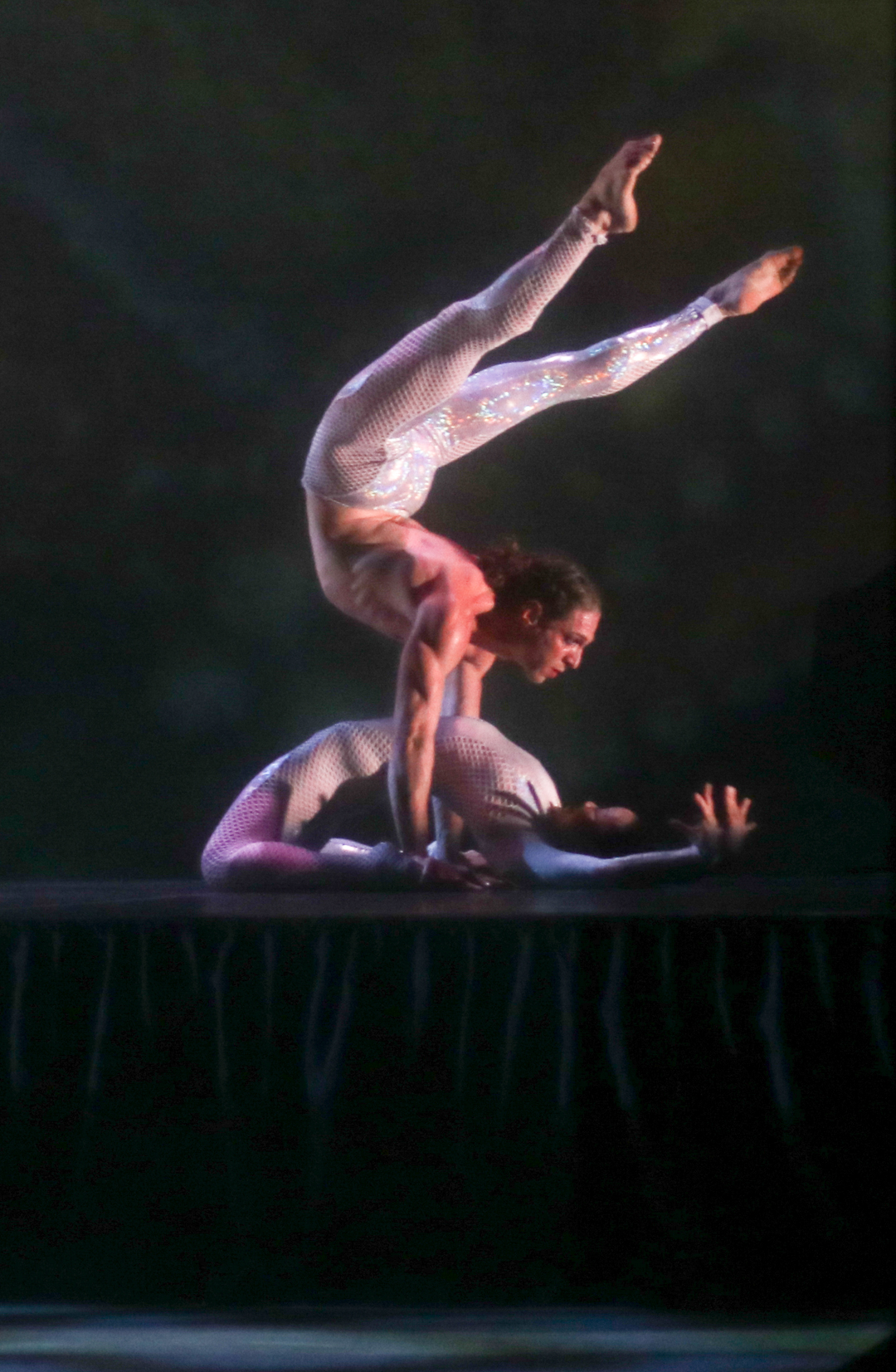
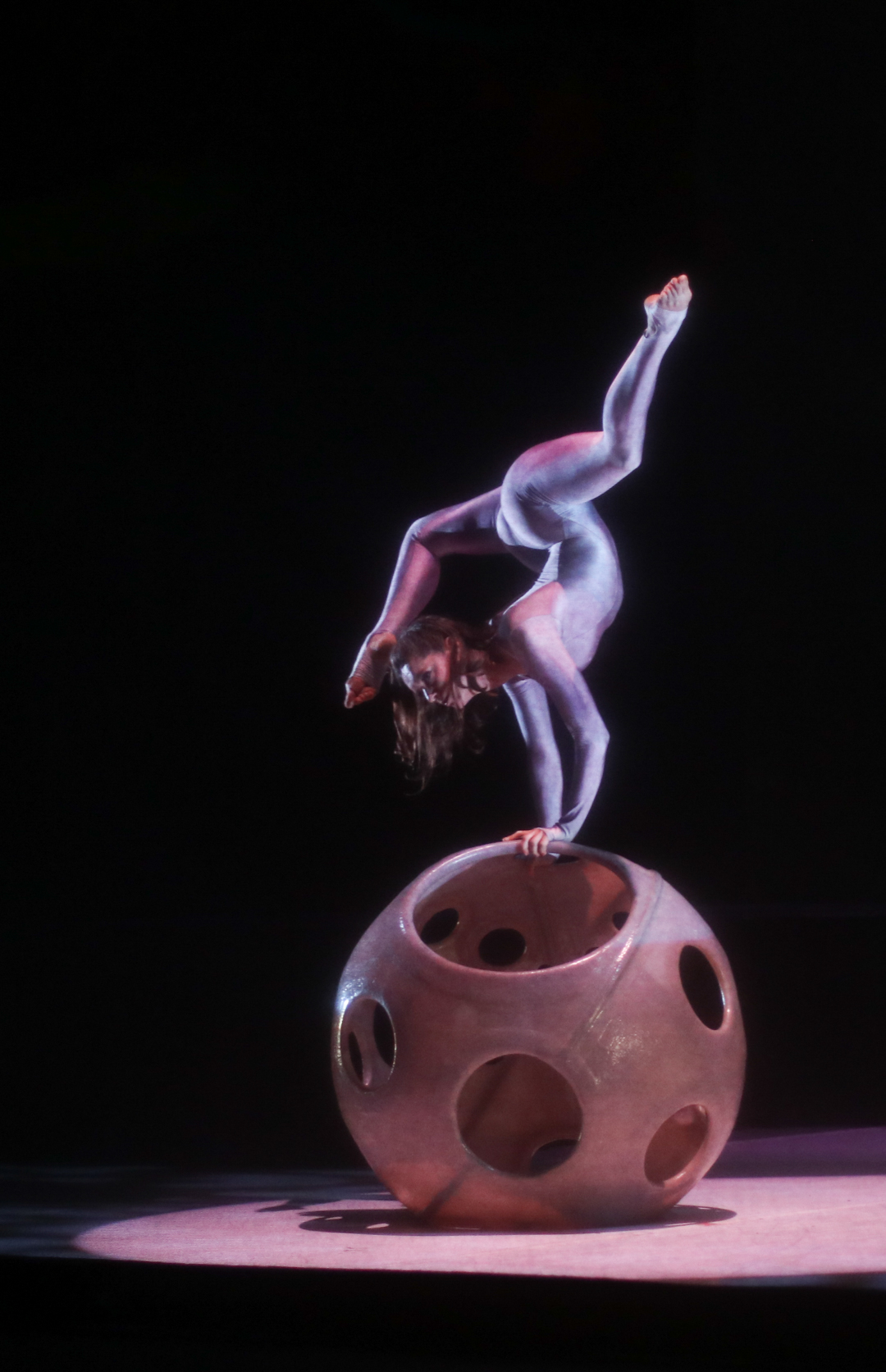
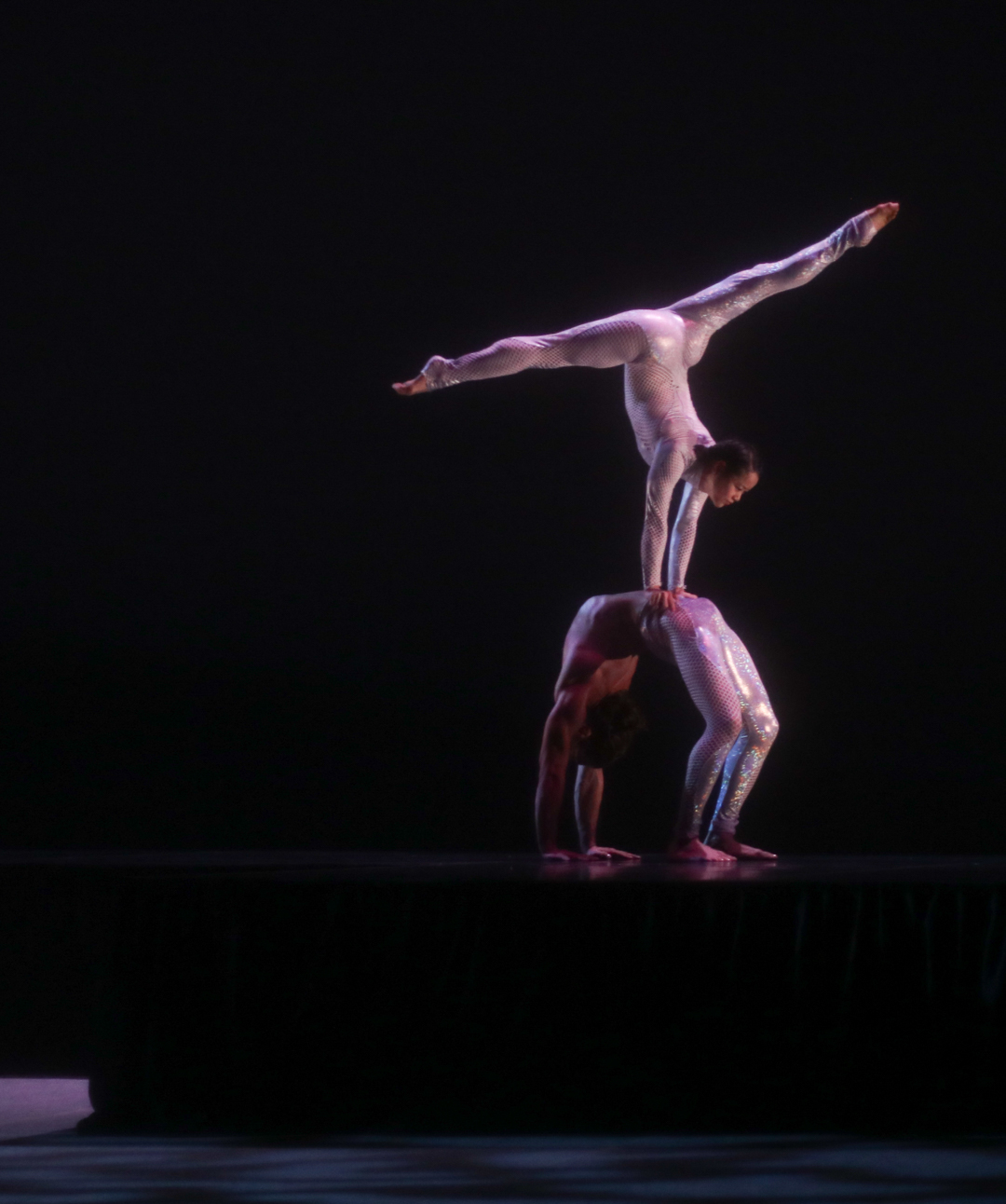
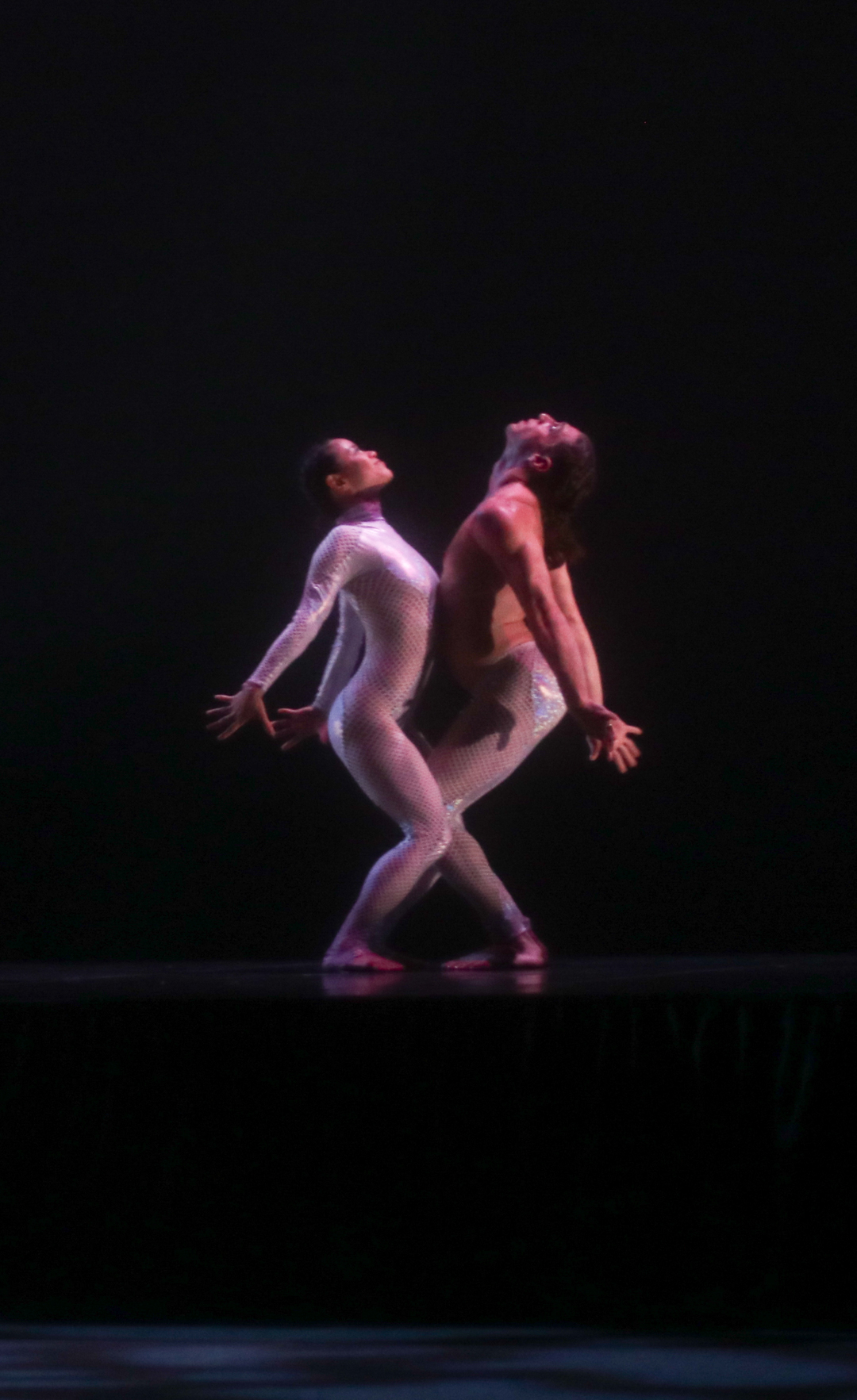
Photography by Eliya Selhub
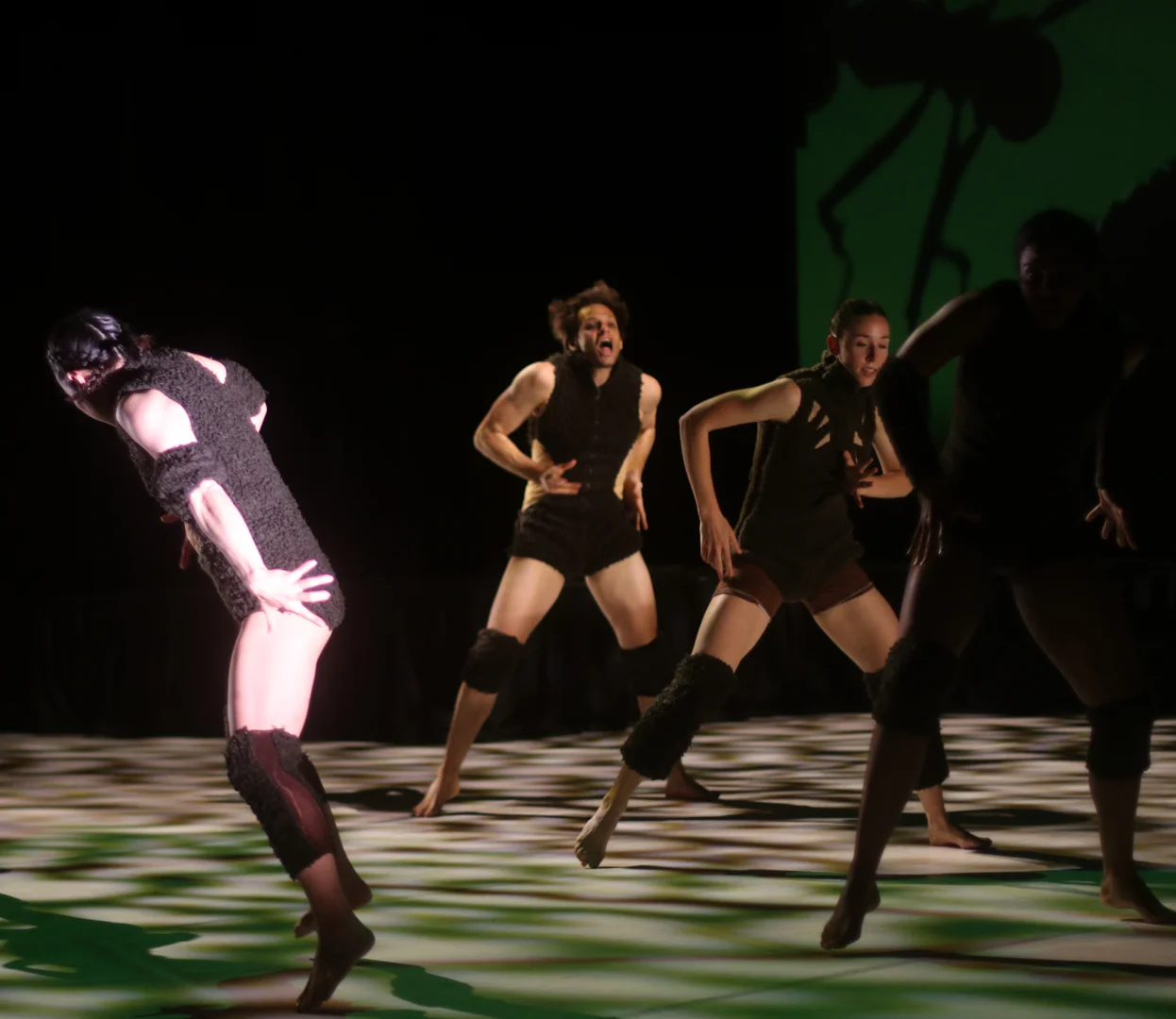
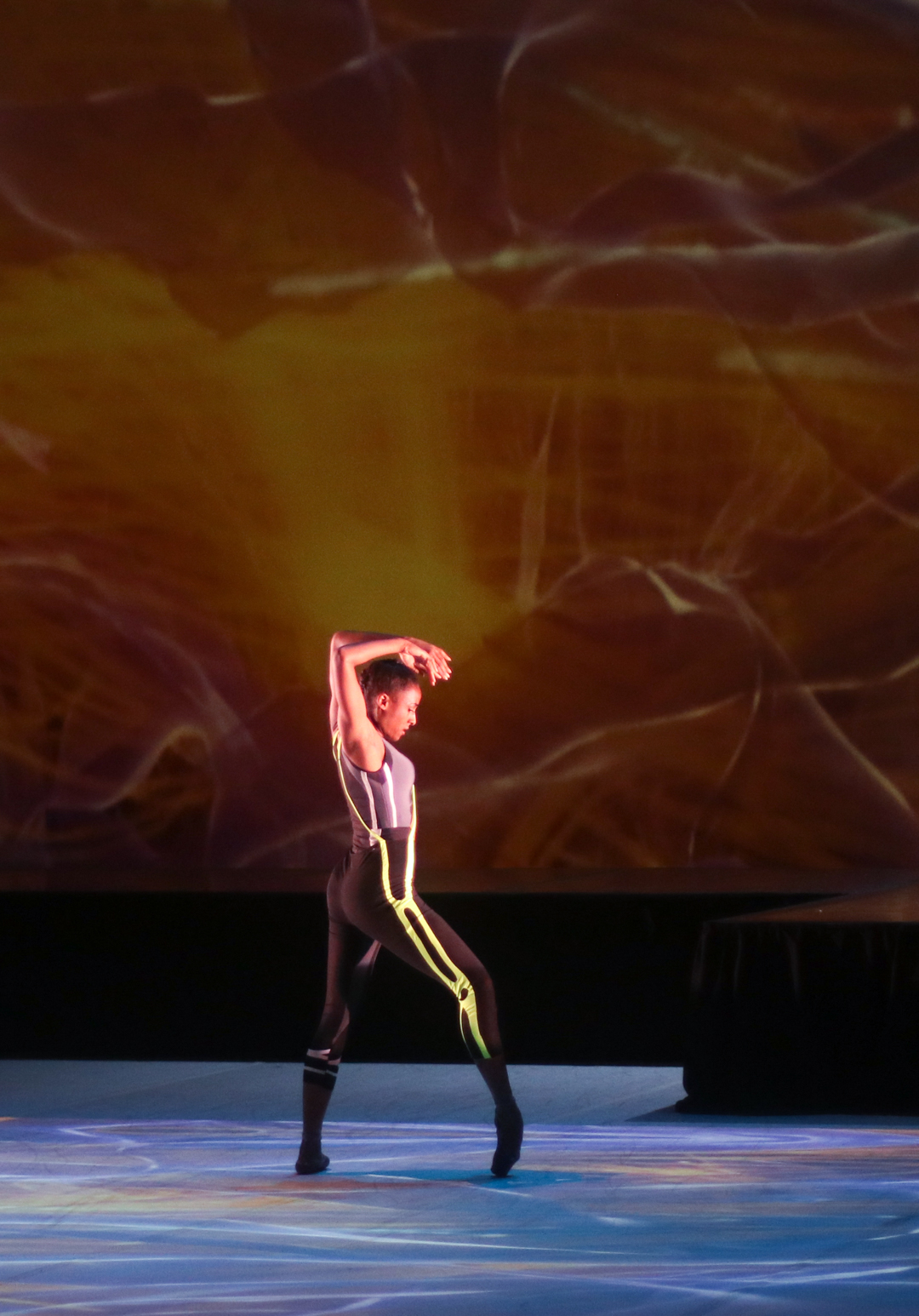
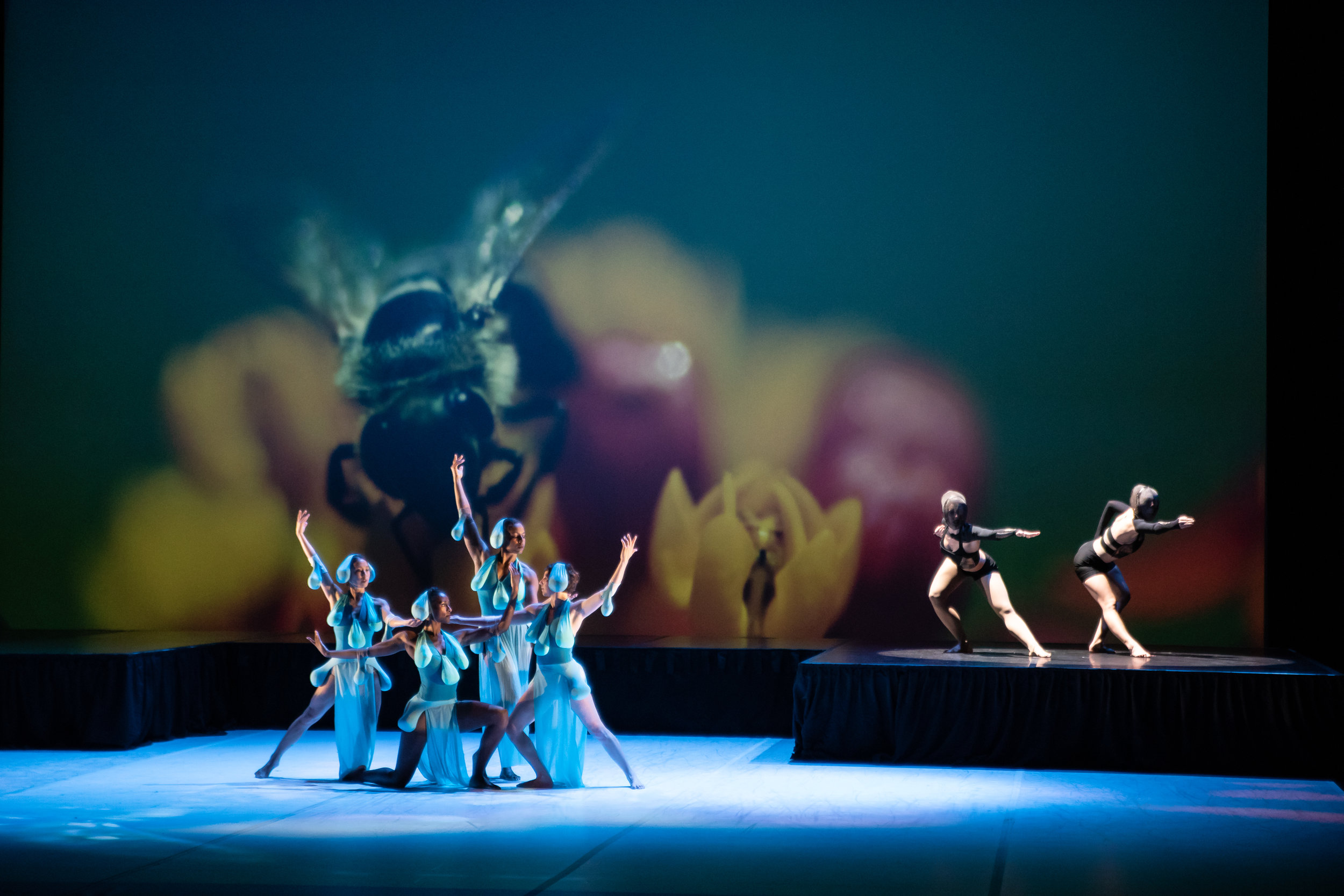
“2005’s Digging in the Dark took a deep dive into the circle. An open orb hung from the rafters. Four performers engaged with the structure – climbing onto it, sitting as it spun, cycling through aerial choreography within its arcs and curves. At the same time, movement phrases unfolded on the stage in circular patterns. And the notion of the circle found its way into solo work with monologues of arched arms and turning sequences. Here, two iterations of the same shape were being simultaneously expressed and contrasted: a) suspended in the air and b) on a traditional surface. Act I closed with a revisiting of Biome (2007). An insect colony invaded the space, members fighting and devouring each other. The atmosphere was vicious and primal as the cast flattened each other on the ground, choked their colleagues’ necks and savagely attacked shoulders and other extremities. The Capacitor ensemble embodied nature’s ferocity with impressive (and frightening!) accuracy.”
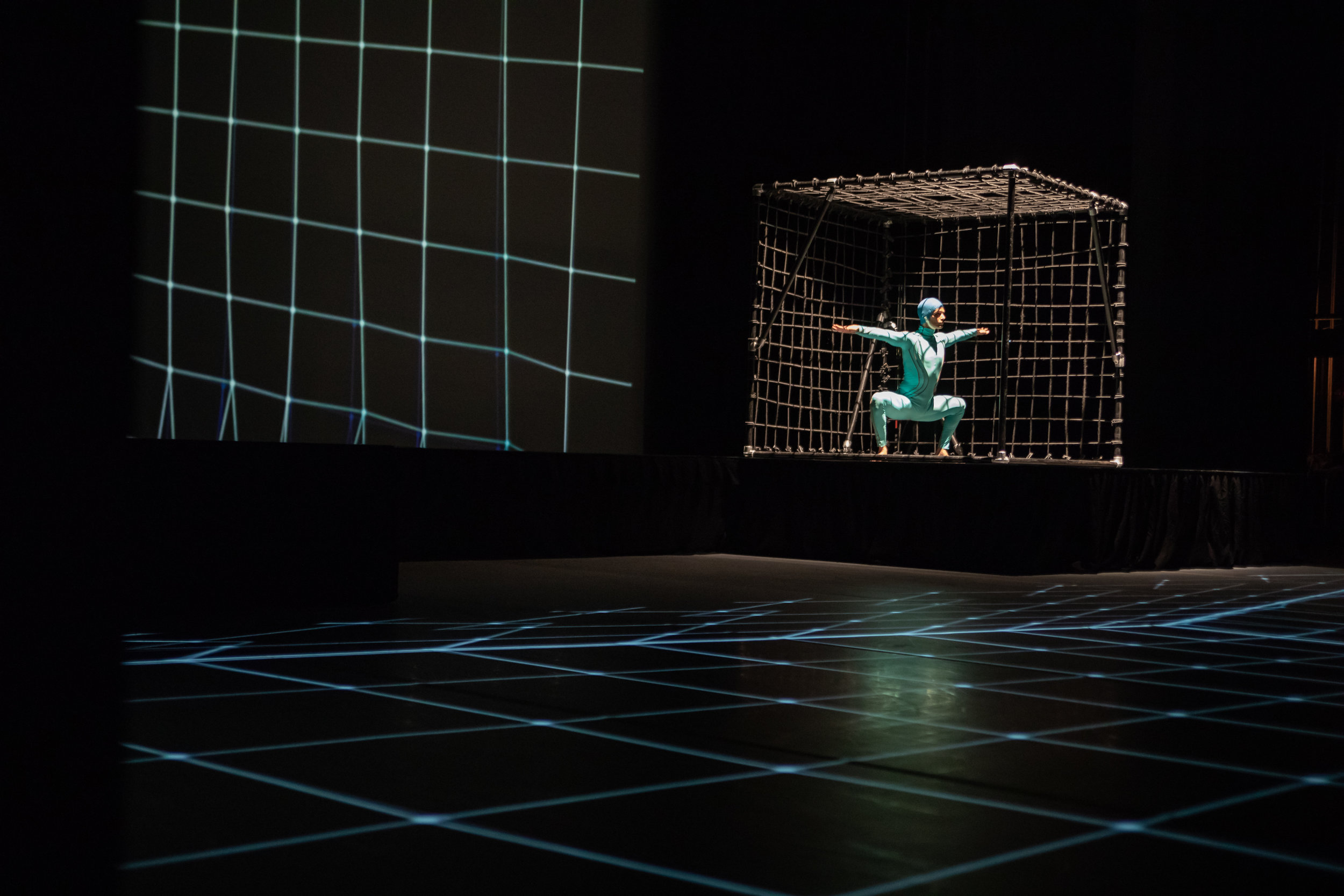
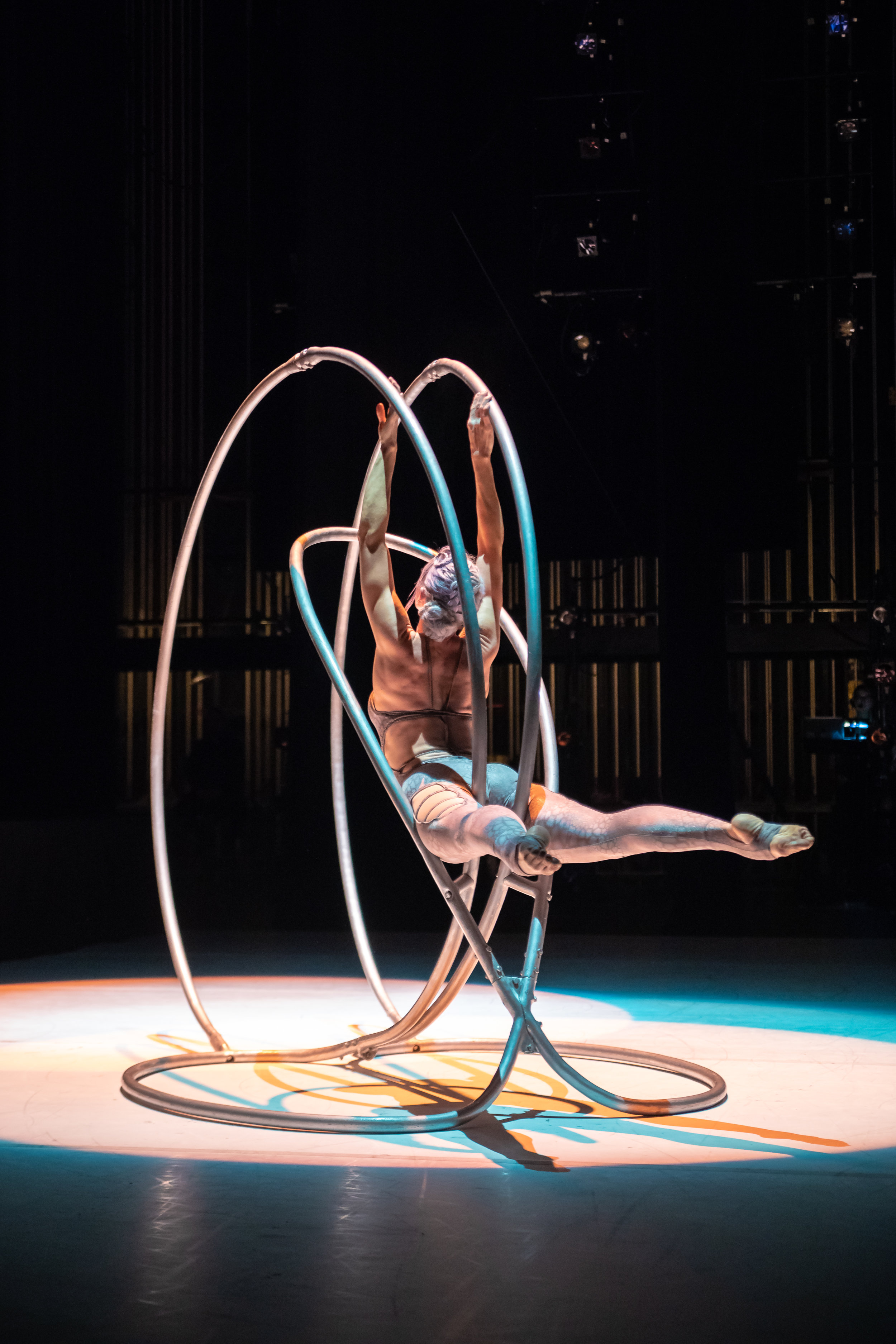
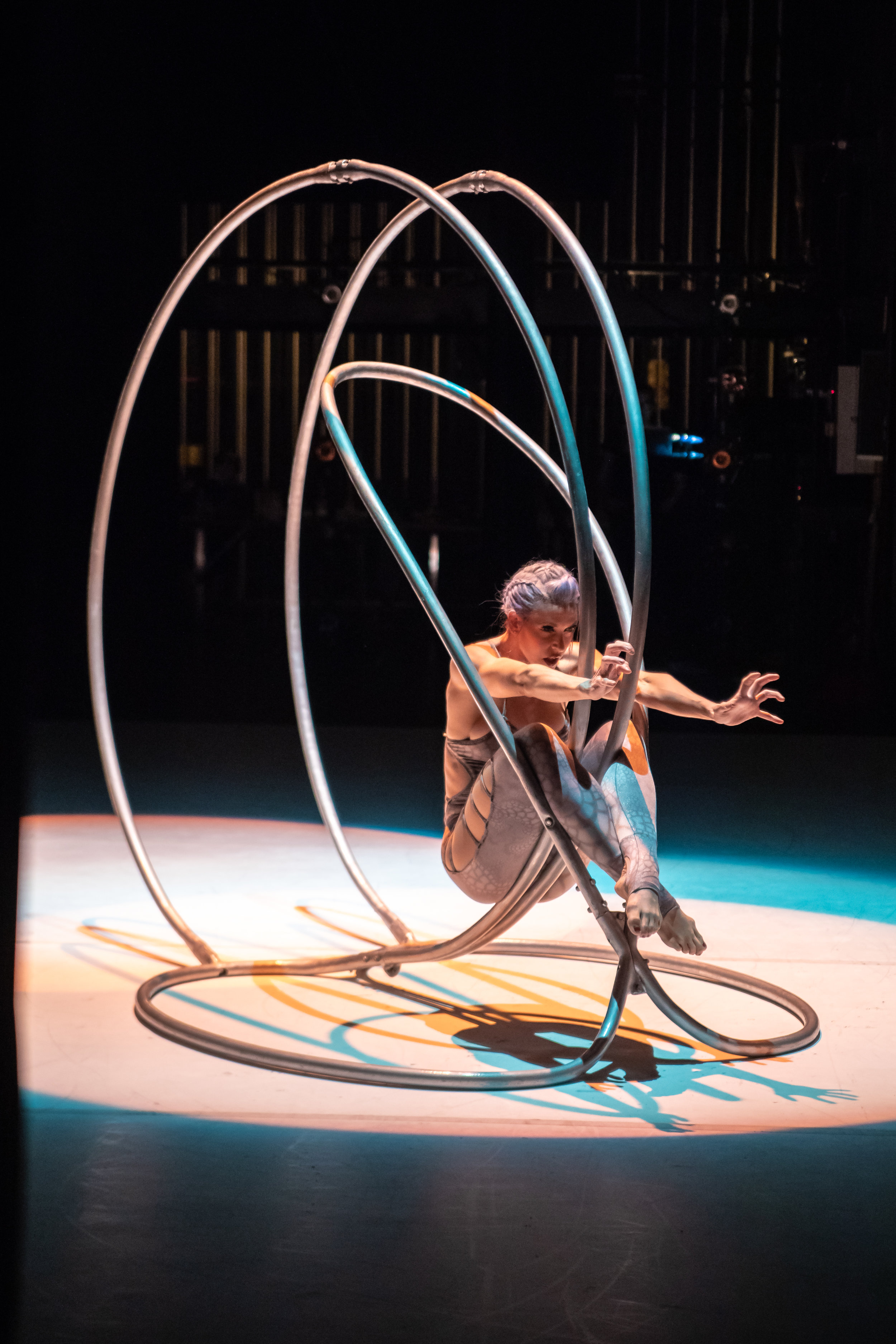
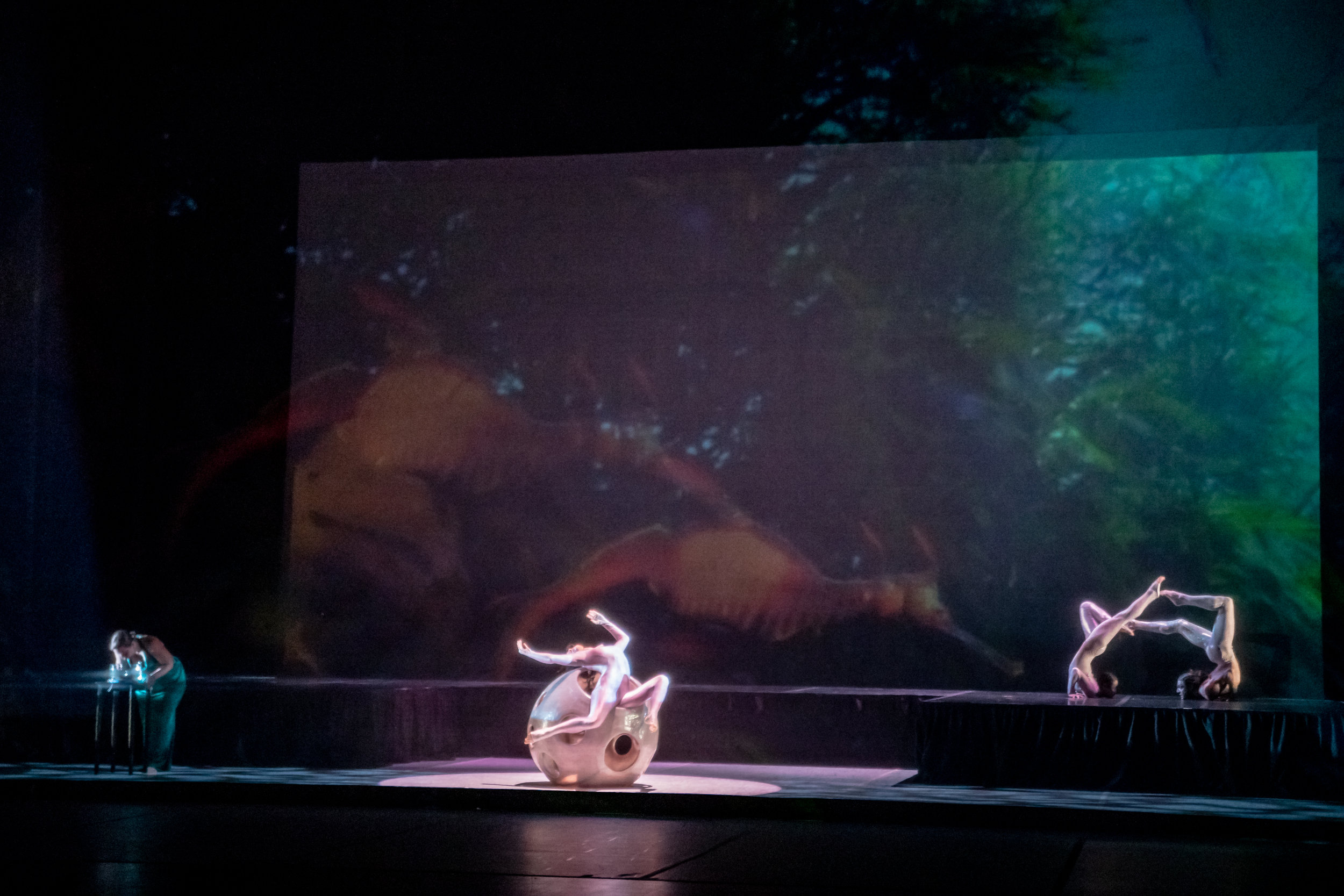
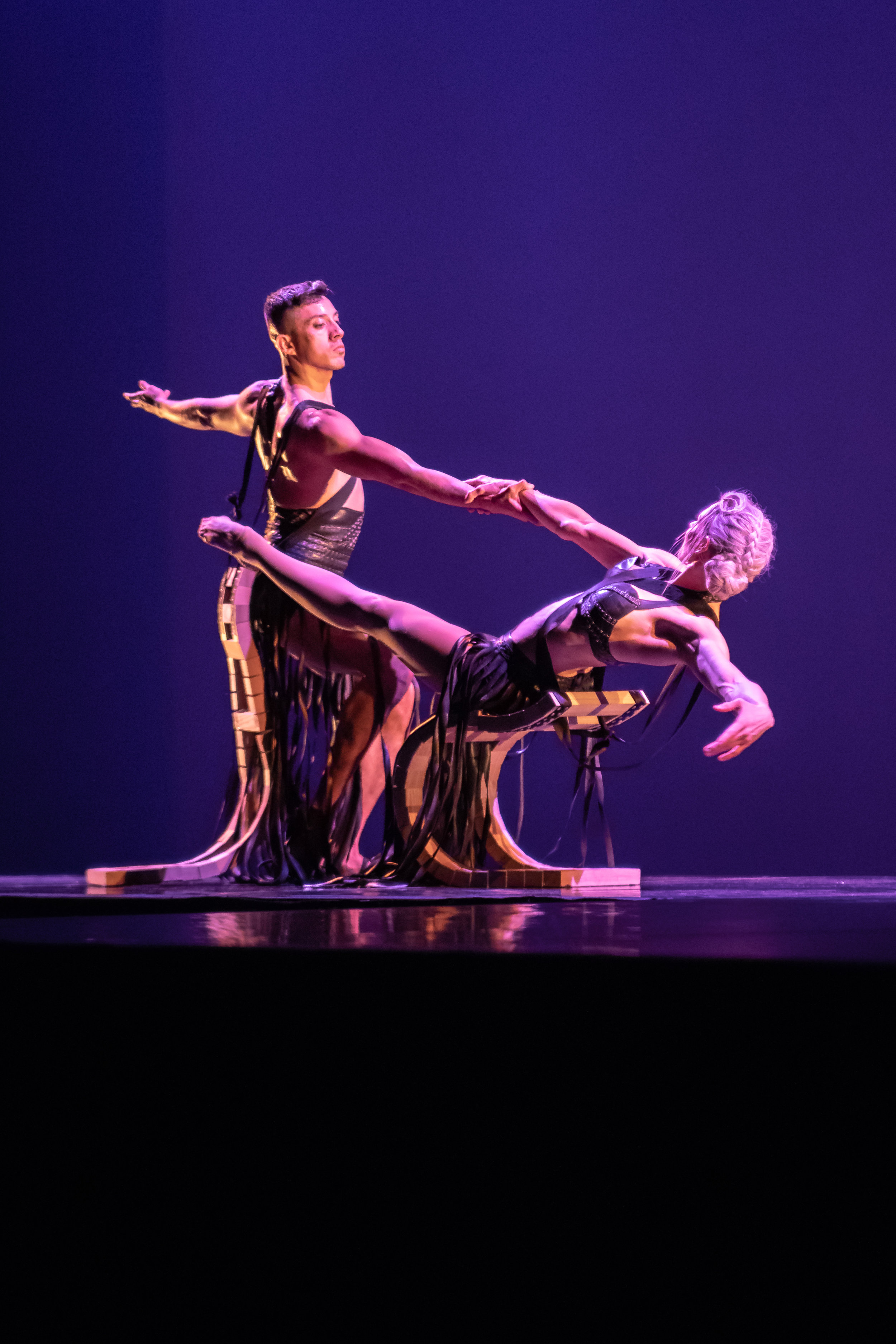
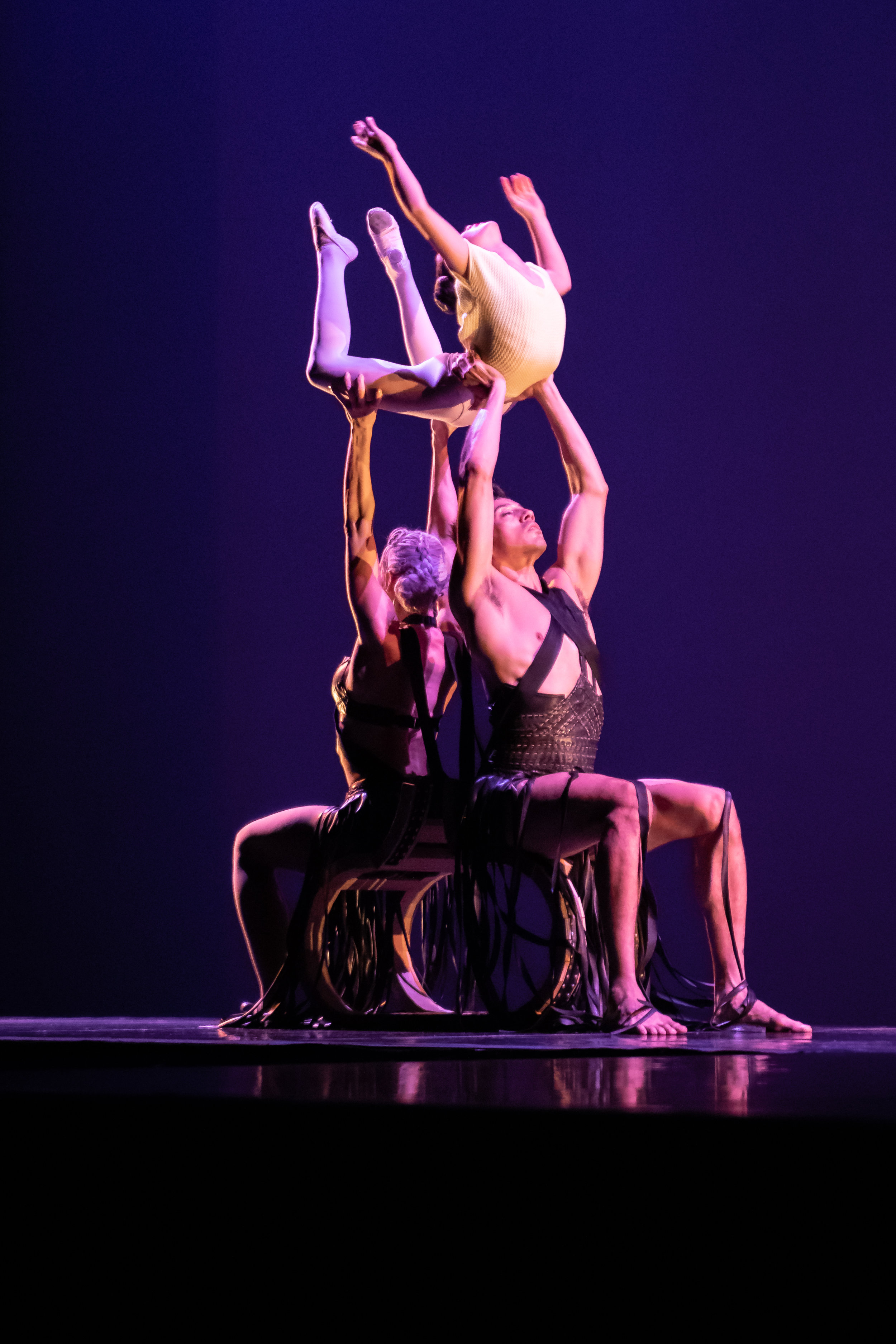
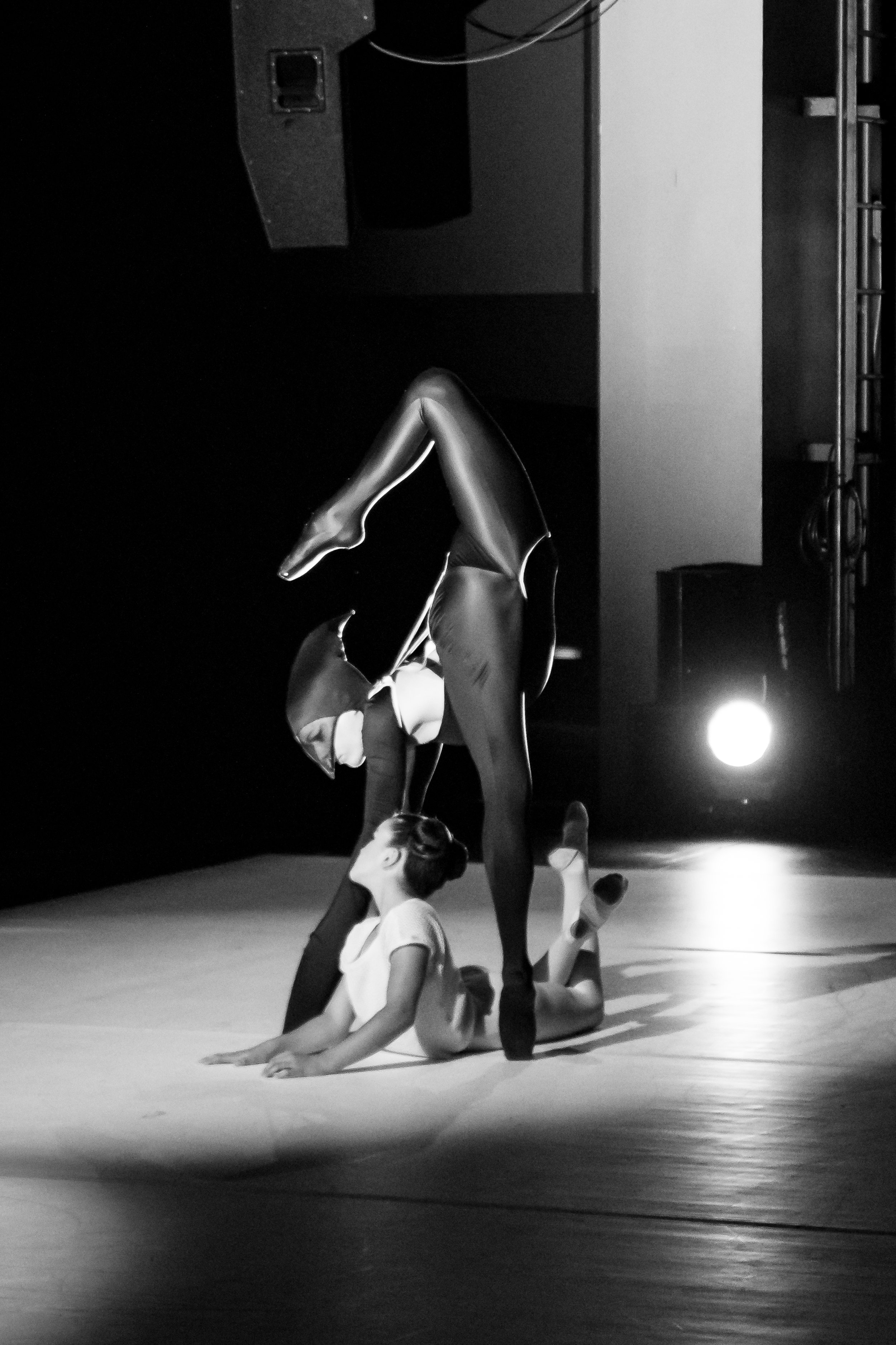
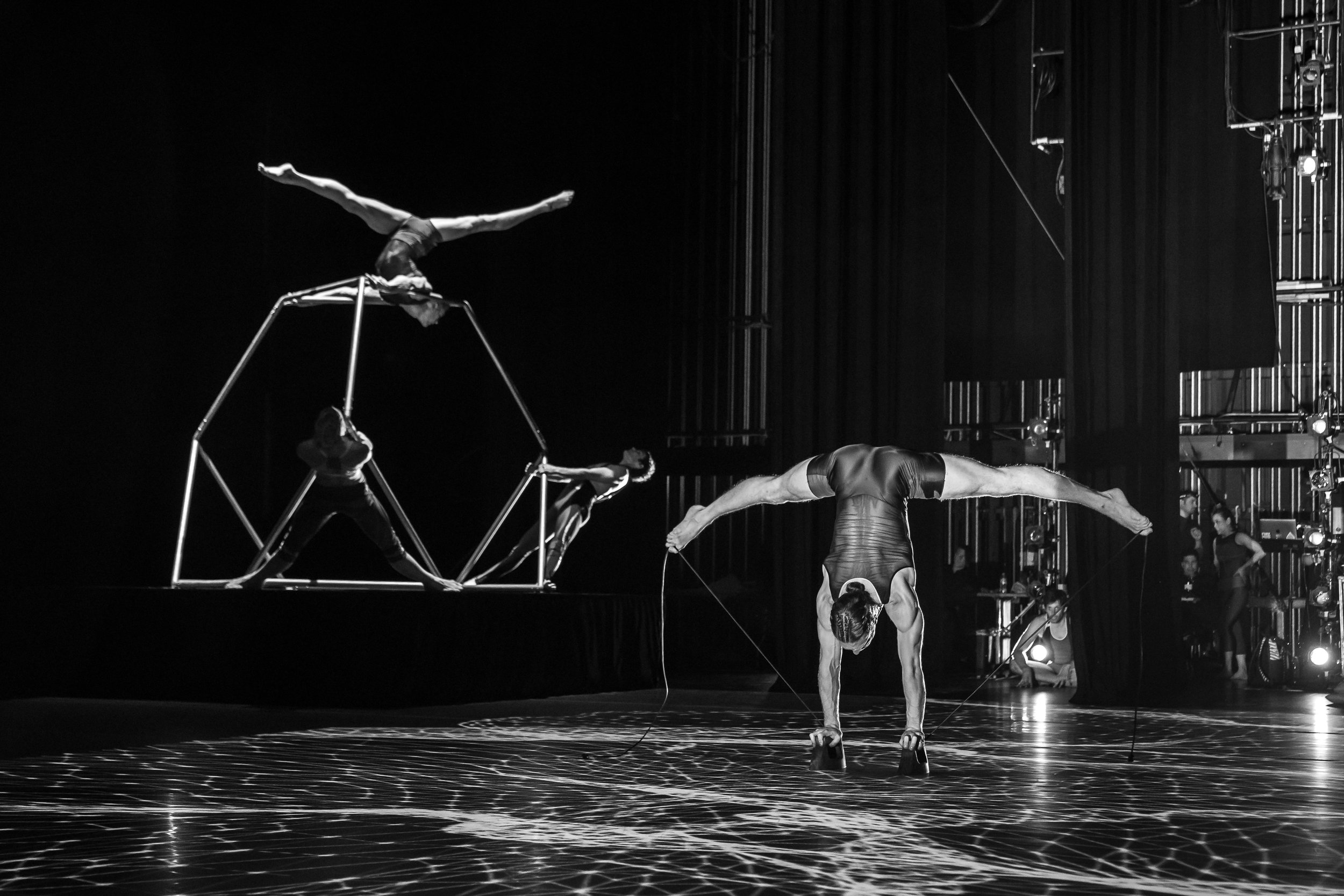
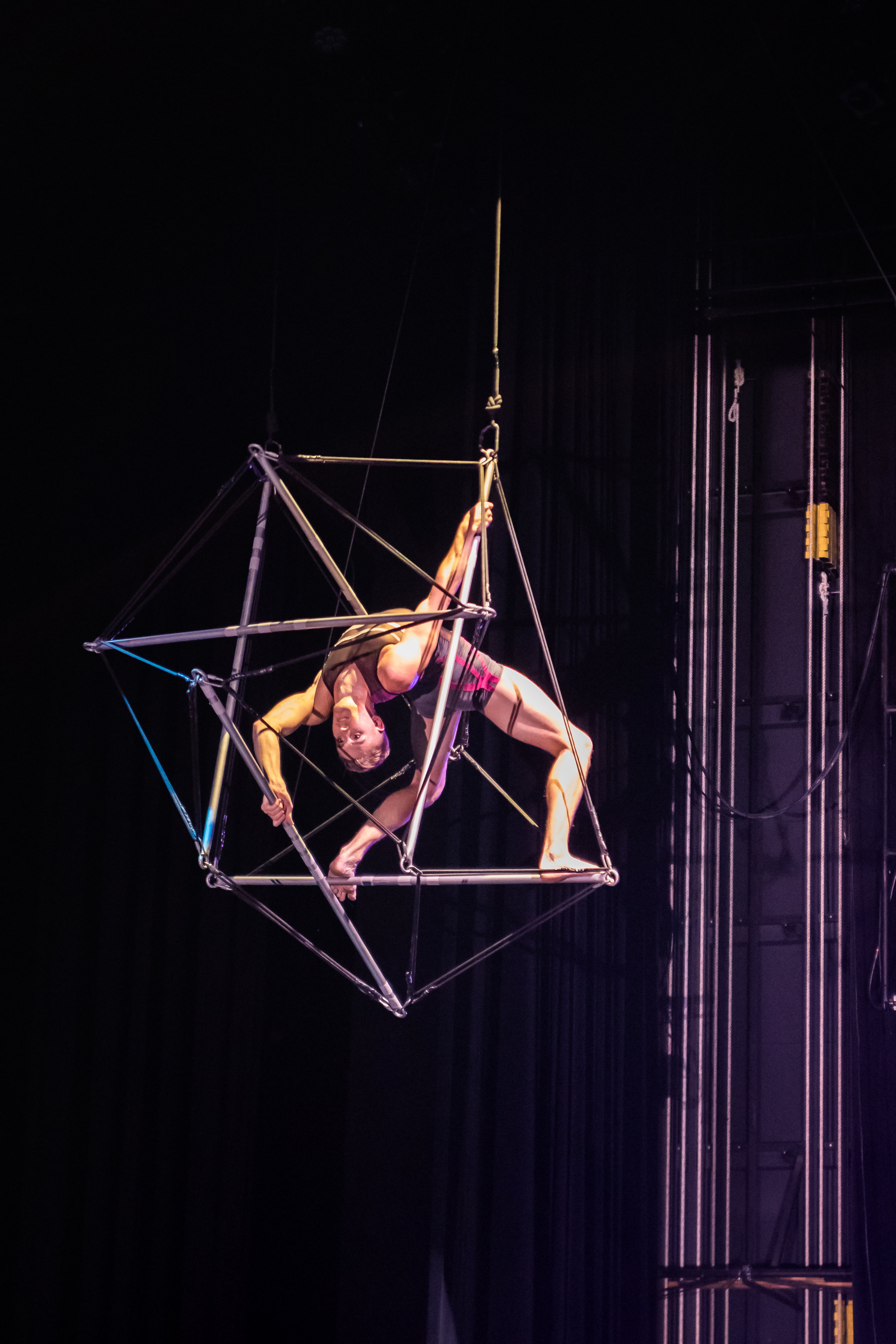
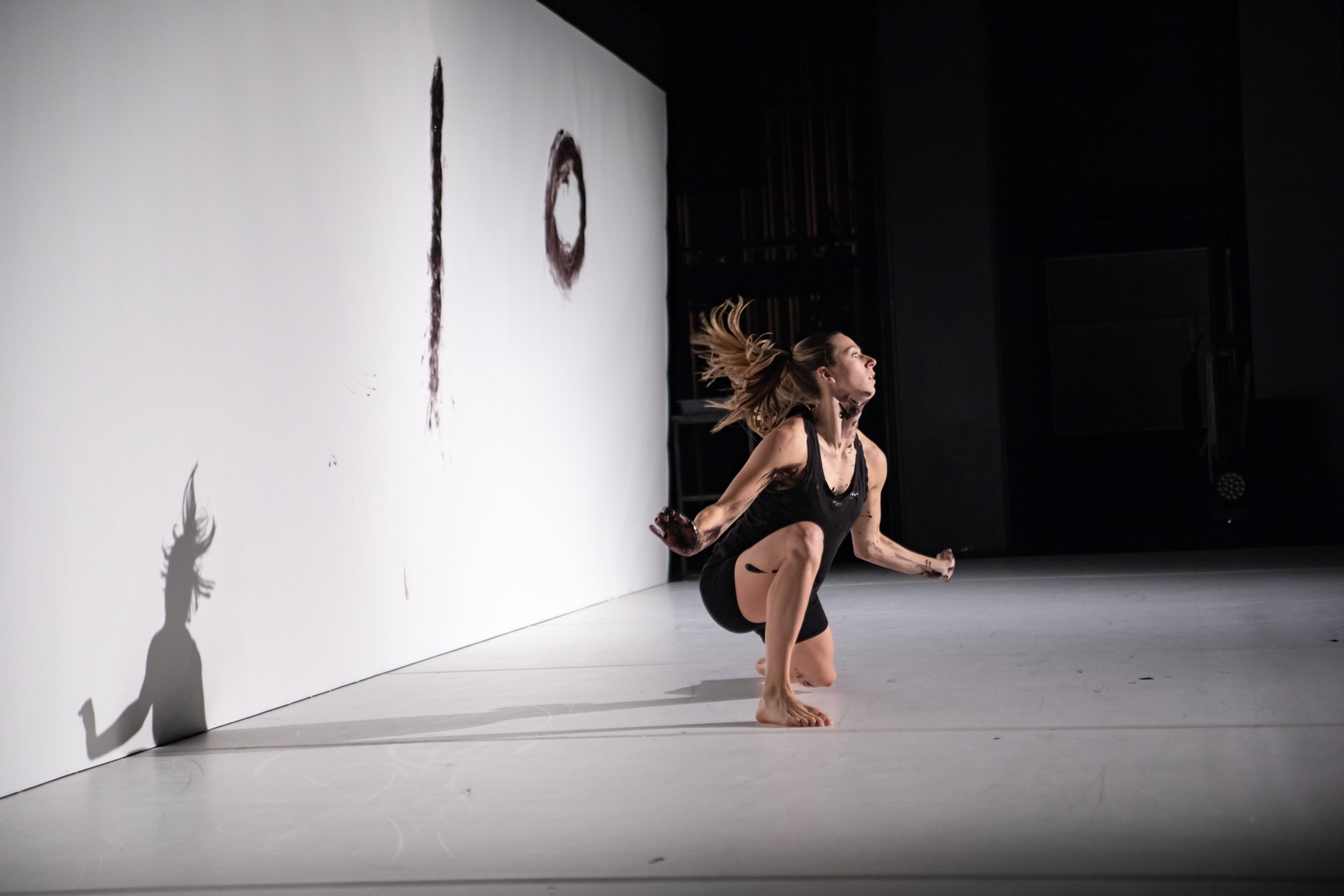
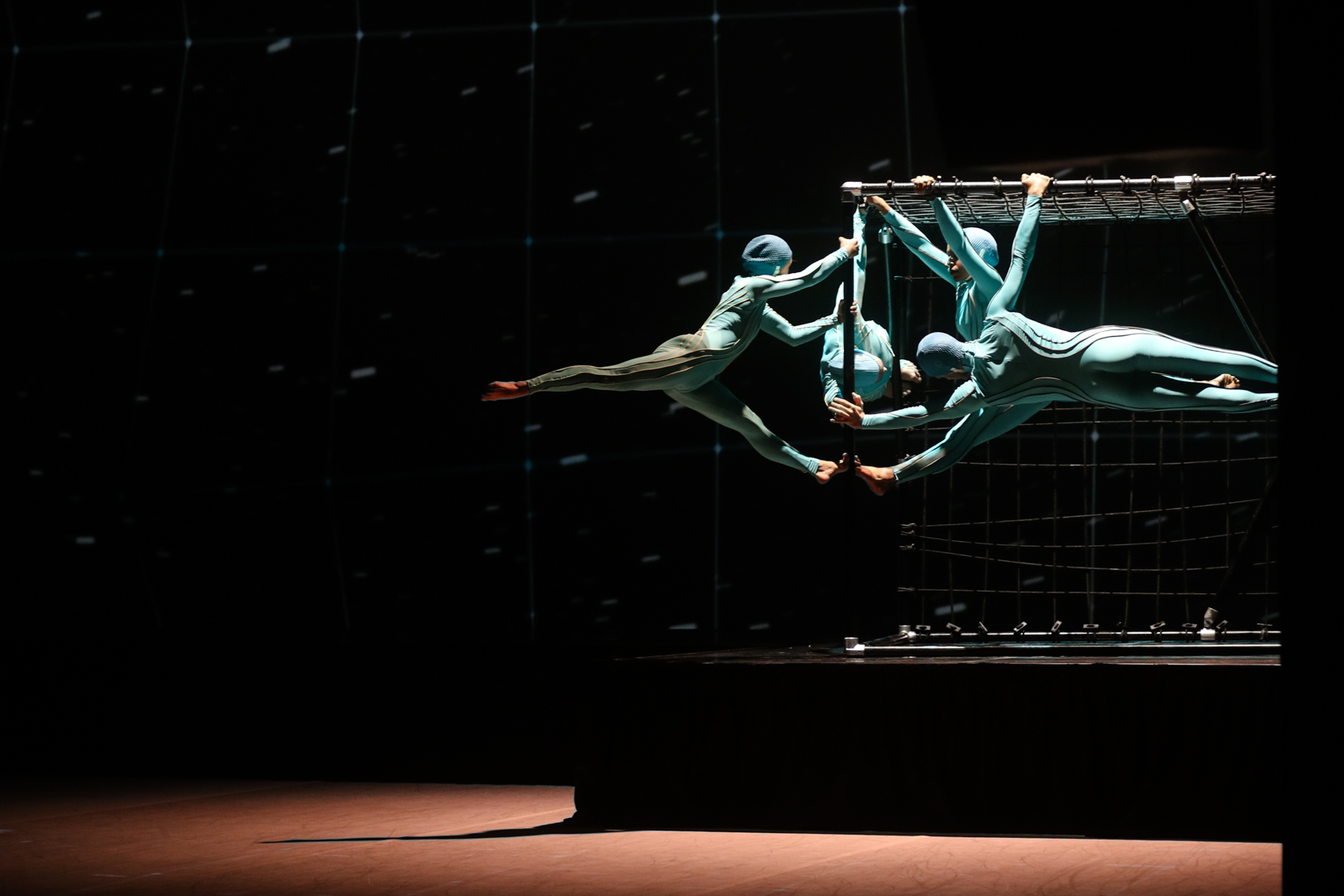
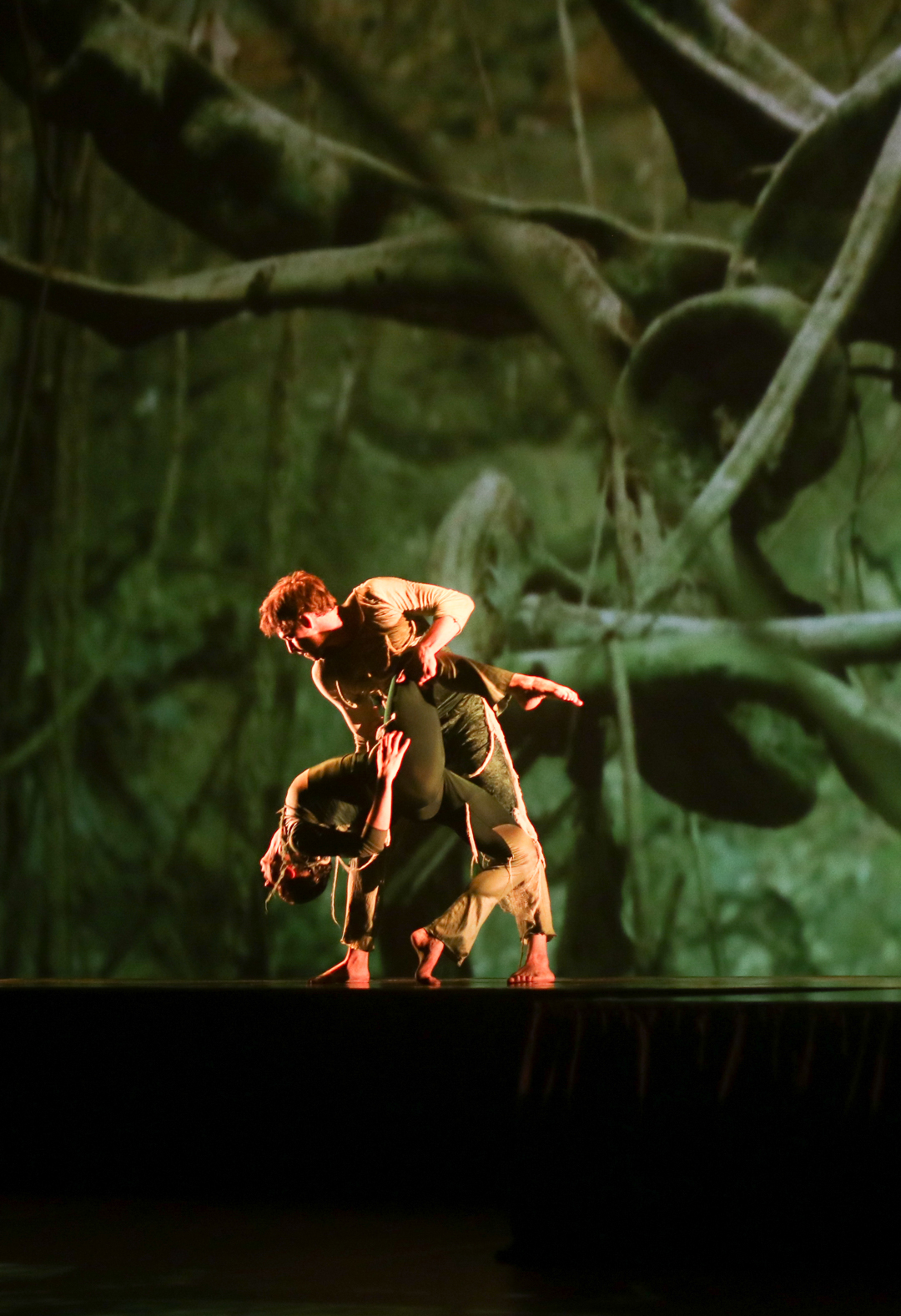
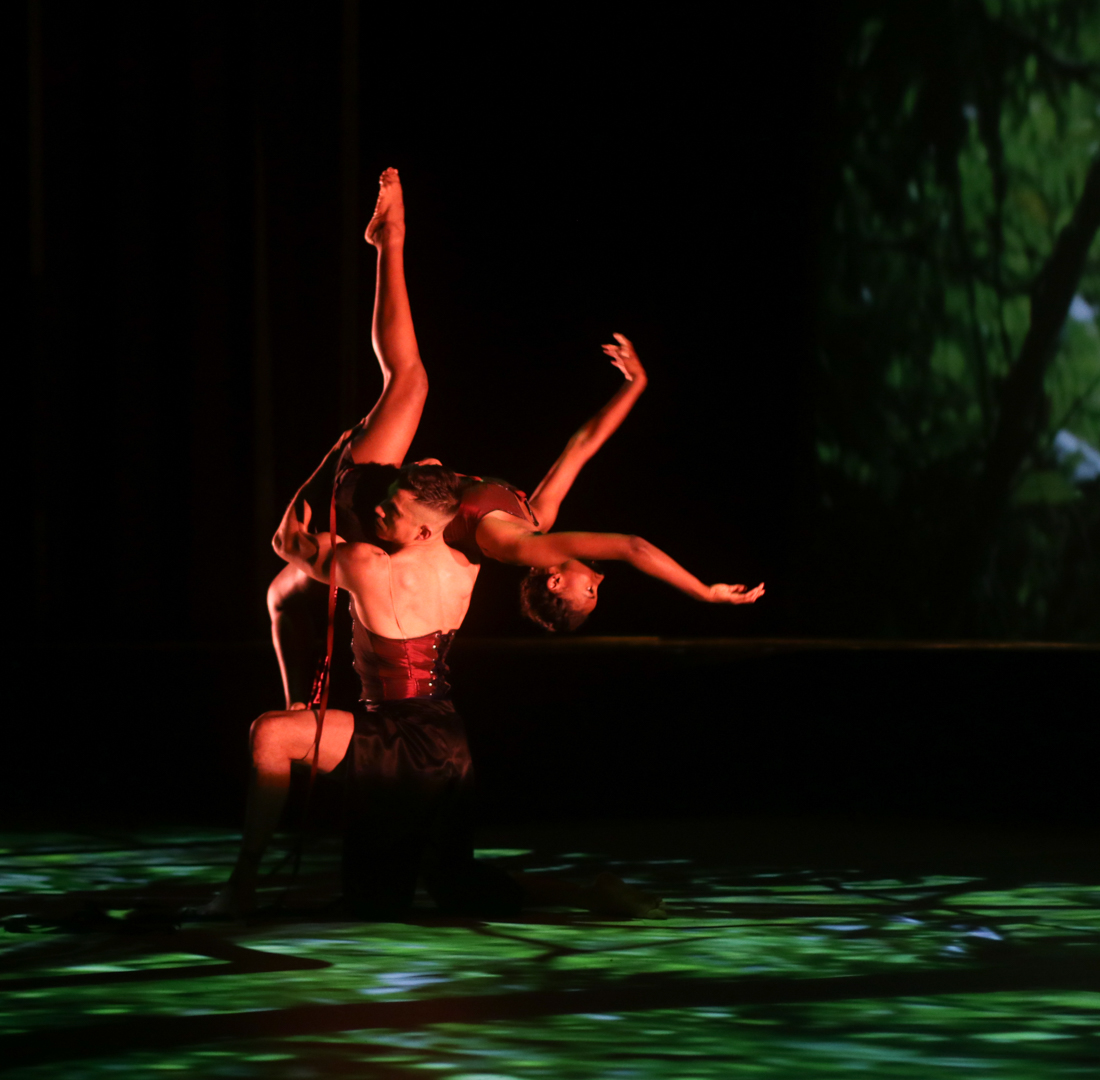
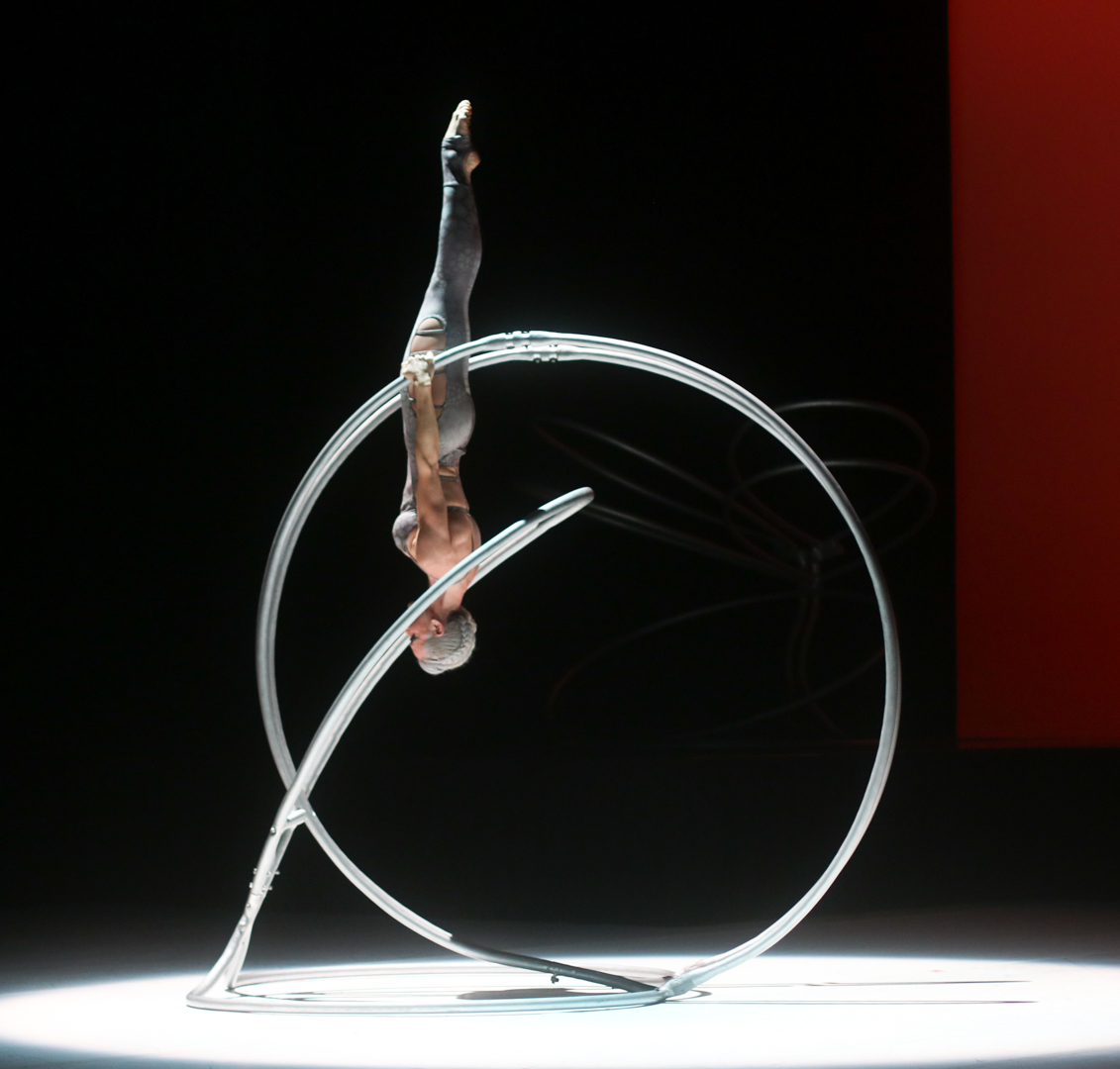
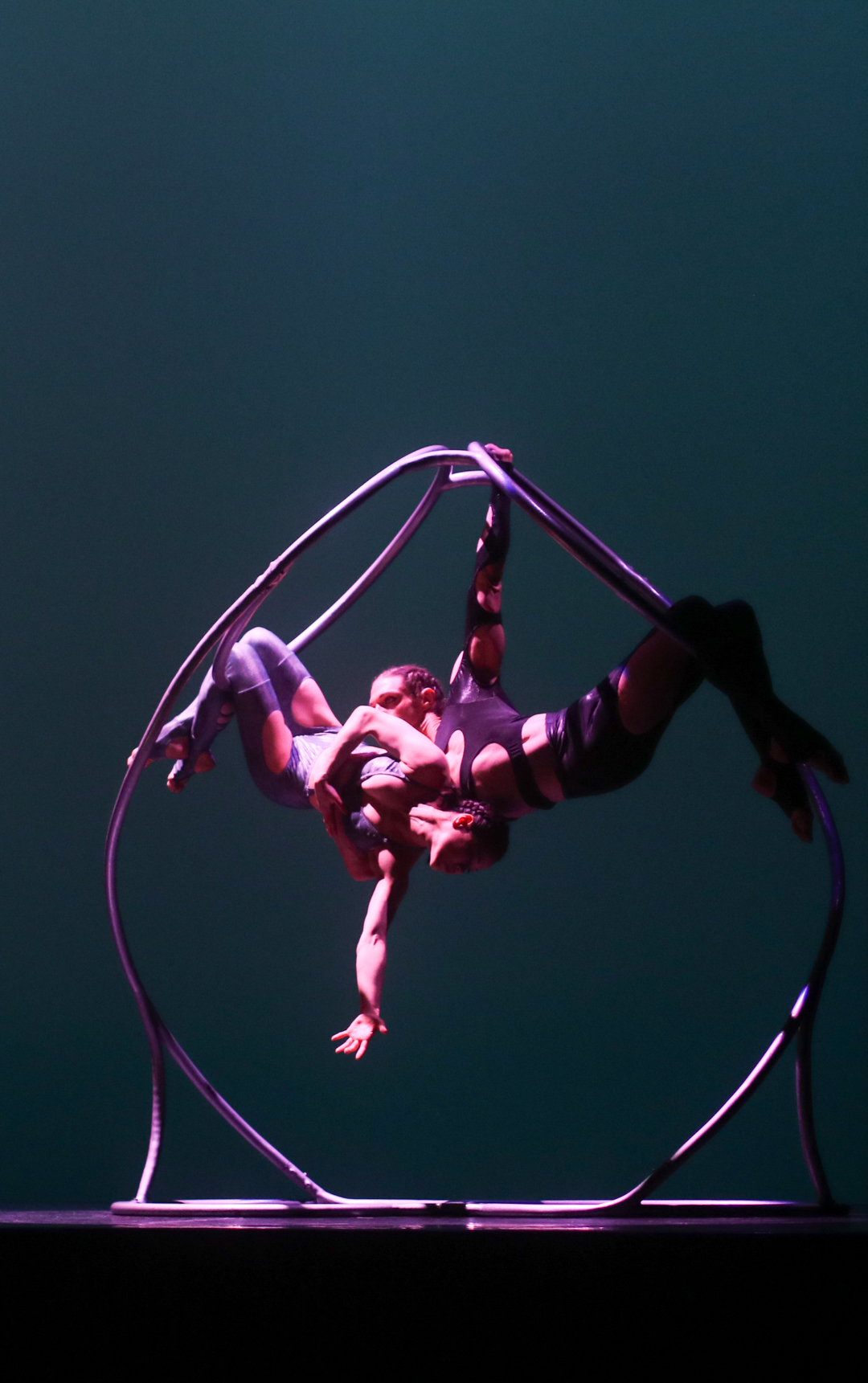
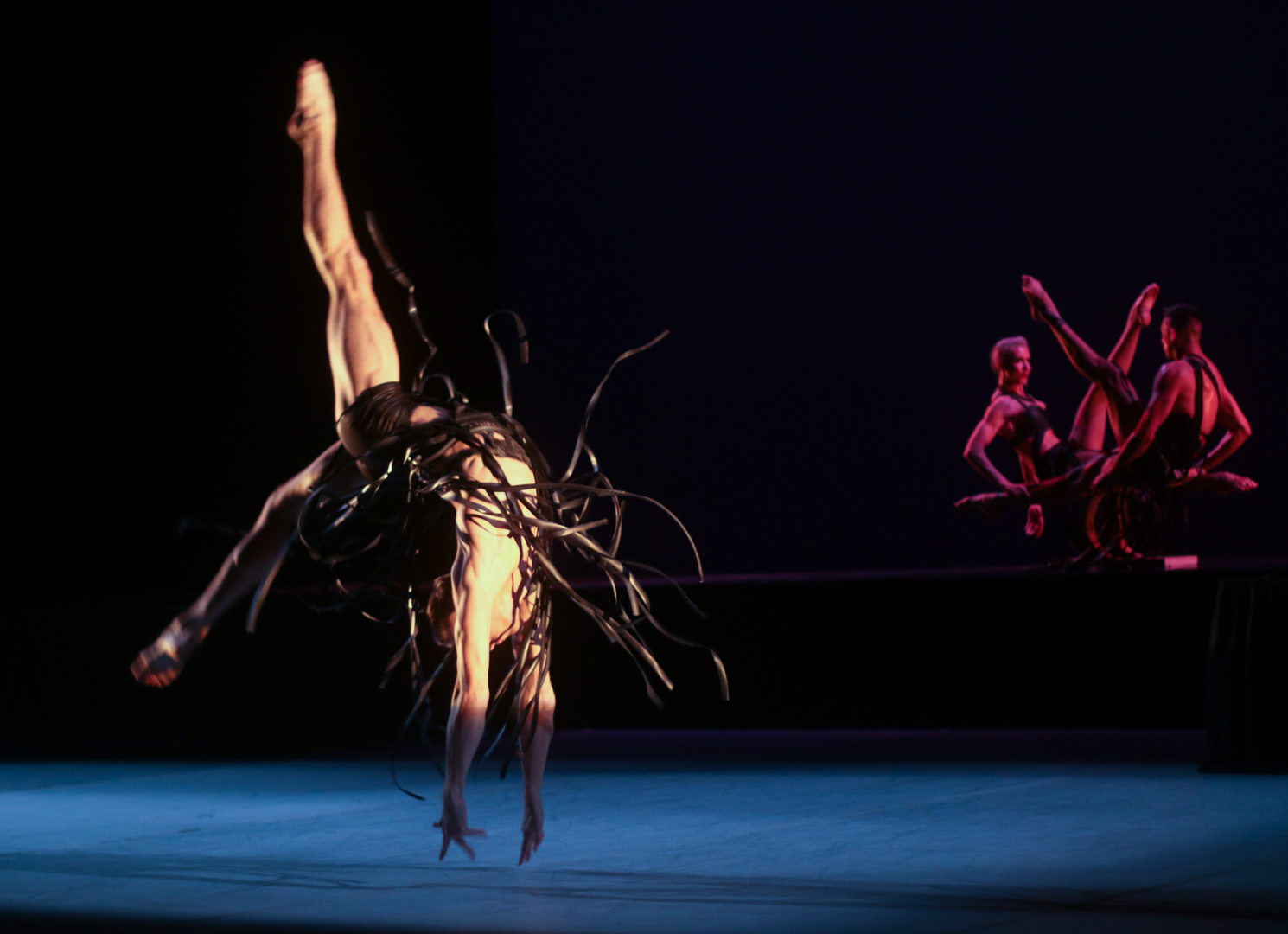
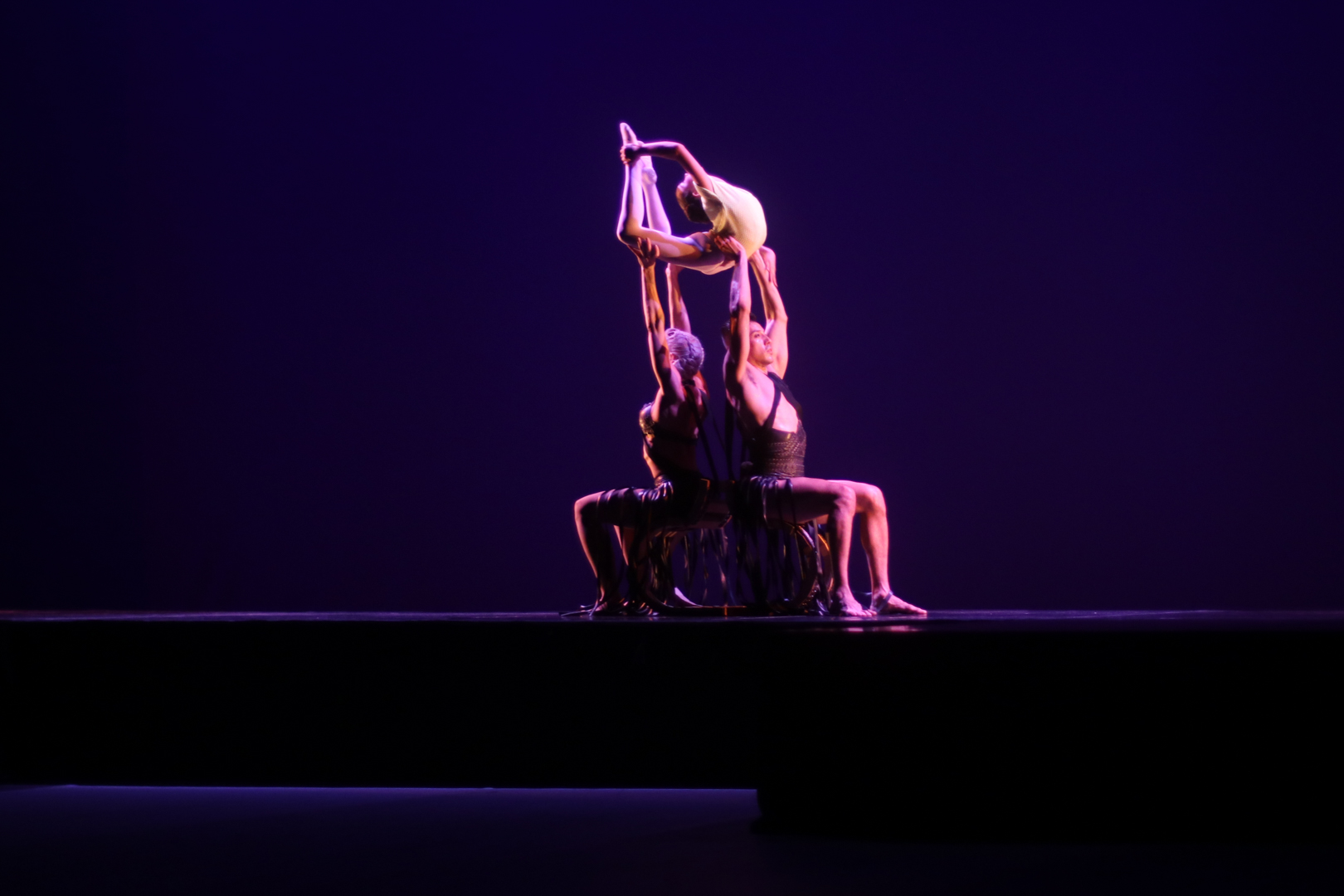
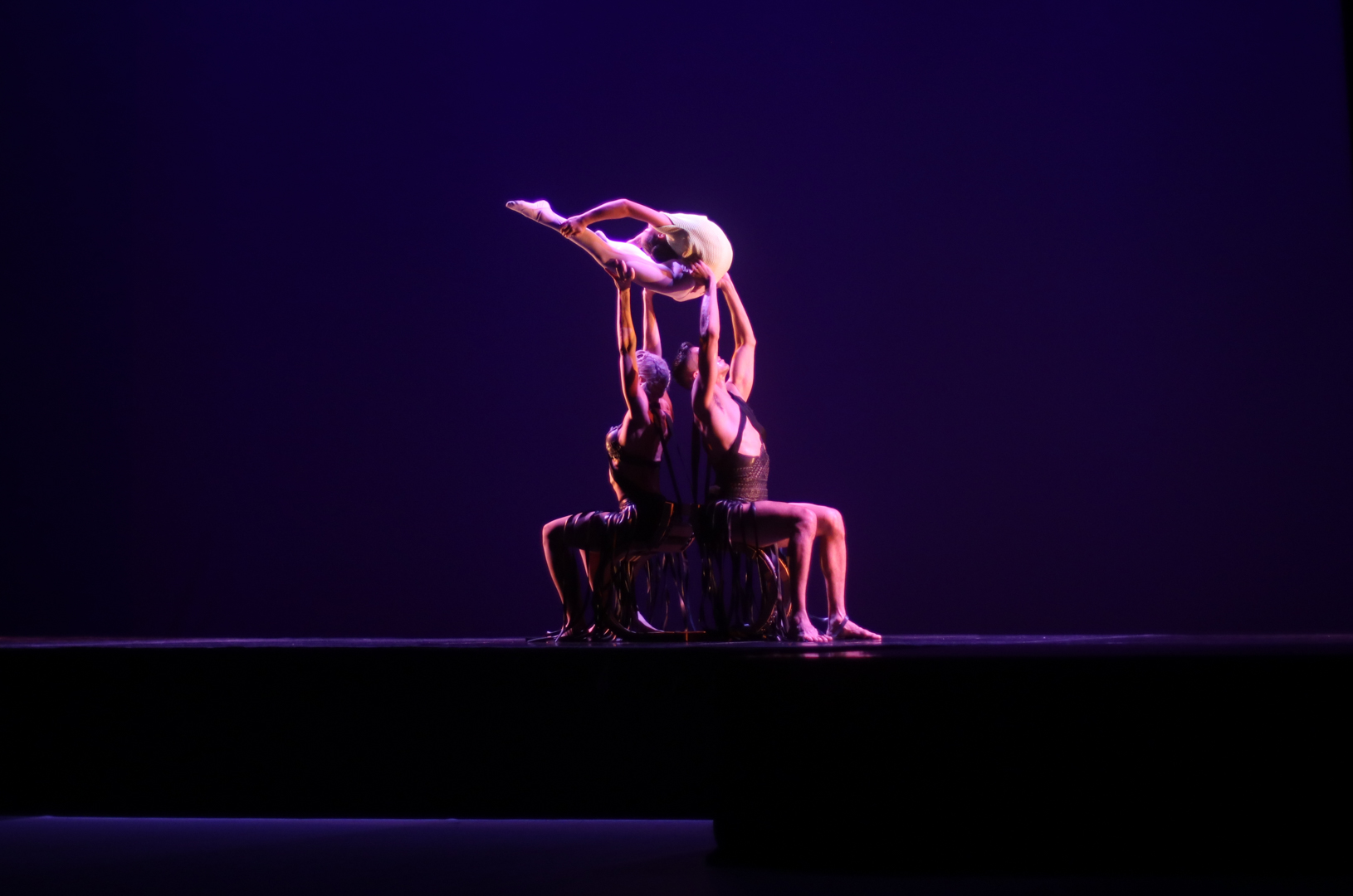
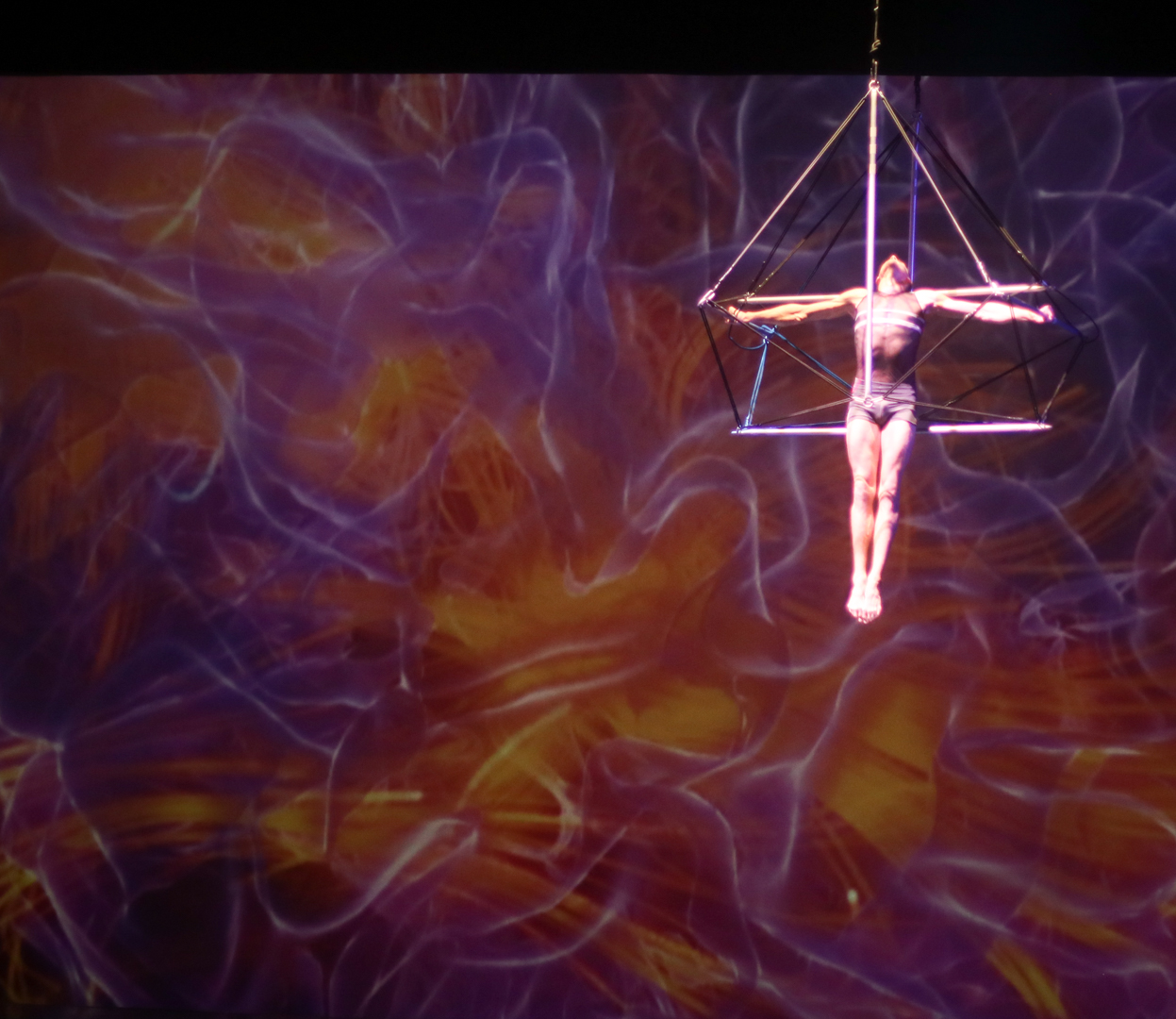
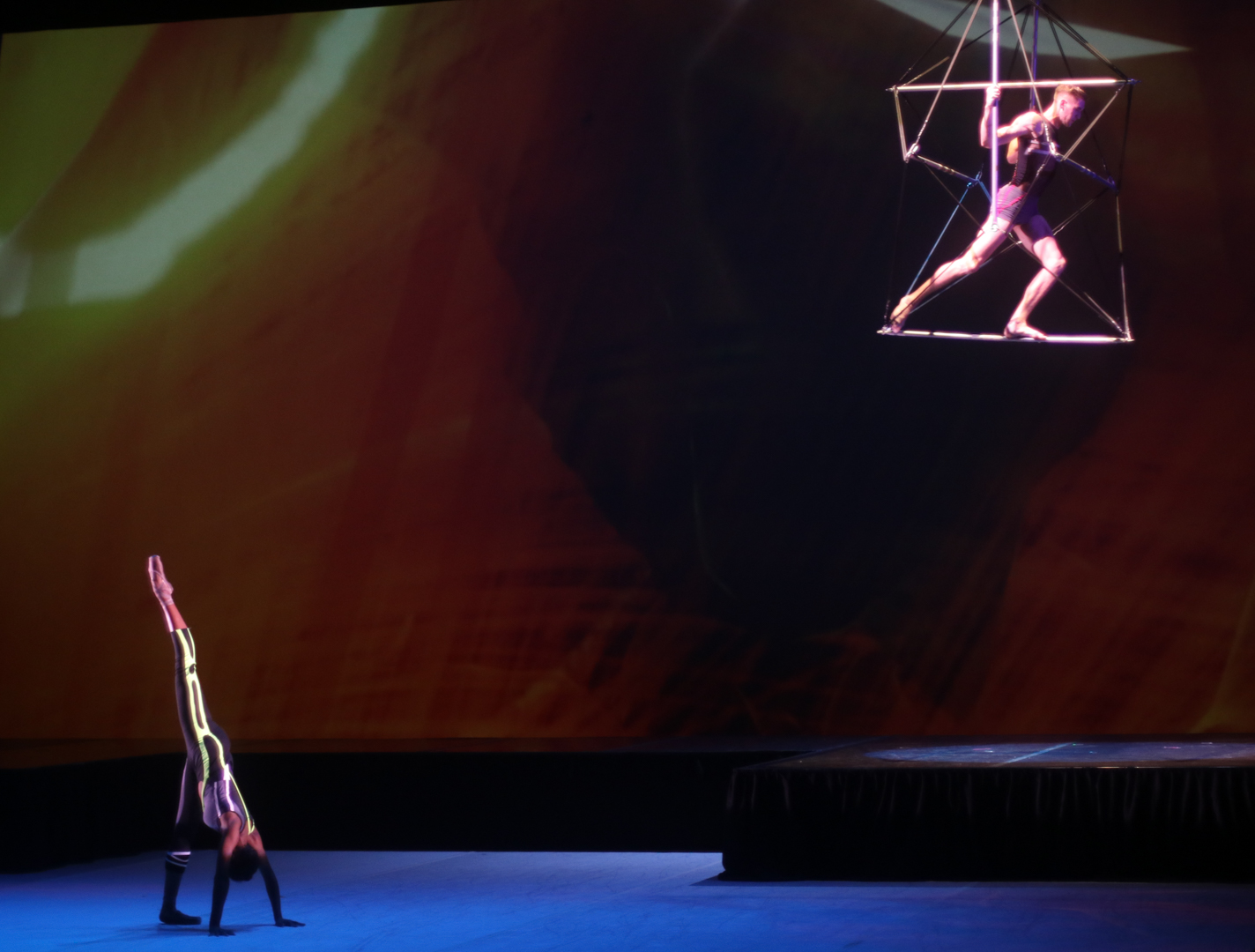
“With acrobatics and aerial phrases set within three spiraled metal structures, Act II had a solid start. The movement may have been abstract but choreographic investigation was definitely underway in this excerpt from 2009’s The Perfect Flower. The metal structures had upended the idea of where the ground and floor were, and instead, posited a different sense of surface for the choreography. Rather than hindering physicality, this led to new movement possibilities, including many inverted positions. Several other moments stood out in the second half. Initially the costumes for 2016’s When We Were Small appeared to have long trains. I was completely surprised as these trains morphed into weight-bearing structures. Suddenly the dancers were seated on regal thrones, totally supported by their own costuming. I was also intrigued by a later scene from this same work where pointe shoes were worn on the feet and on the hands. It gave a distinctly insect quality to the choreography. And in Devices’ final excerpt from Synaptic Motion, a flexible, three-dimensional polyhedron was lowered from the ceiling, which a soloist ascended like a trapeze. The structure expanded and folded as he stretched and contracted, like he and the shape had become one.
...The physical feats were absolutely astounding. And the Capacitor artists weren’t just doing tricks. There was ample attention paid to the transitional pathways (how they got into the various positions).”